Executive Summary: Why AI ROI Matters Now
The wellness and hospitality industries are at an inflection point. Guests now demand personalized, data-driven experiences that produce measurable outcomes. The question isn’t whether AI delivers ROI — the data shows it can, when deployed with disciplined KPIs and operational alignment.
Properties implementing AI with clear measurement frameworks often reach break-even in 6–12 months and unlock compounding gains in revenue, labor efficiency, and guest experience quality.
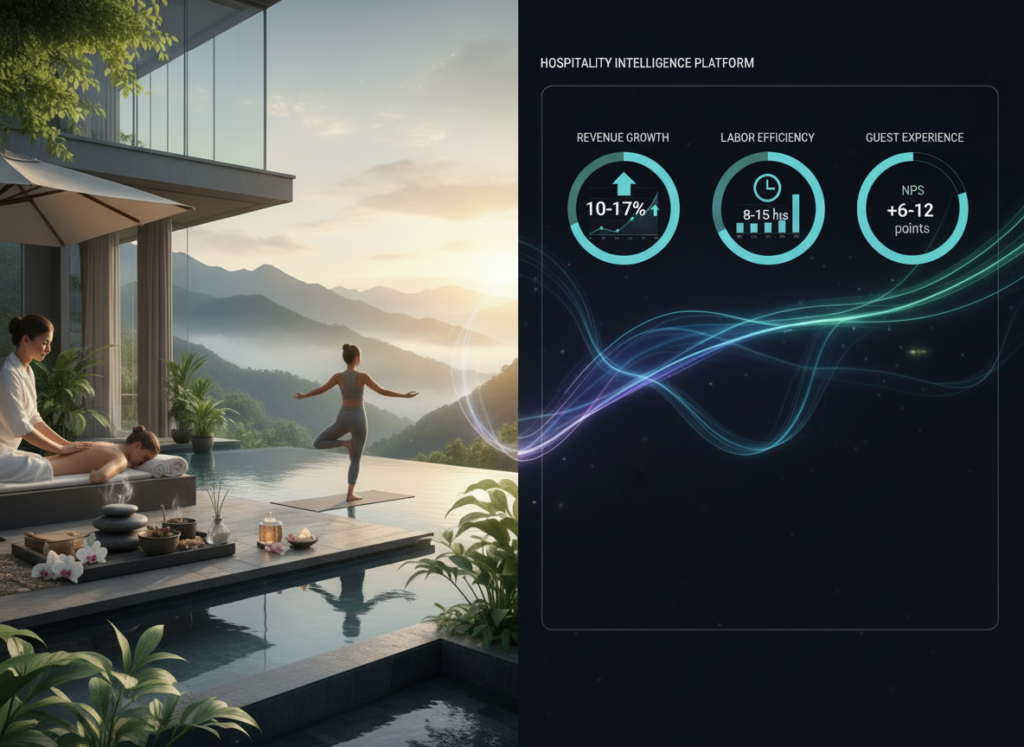
Revenue Growth (10–17%), Labor Efficiency (8–15 hours saved/employee/week), Guest Experience (NPS +6 to +12).
The Global Wellness Economy Is on a Rocket Trajectory
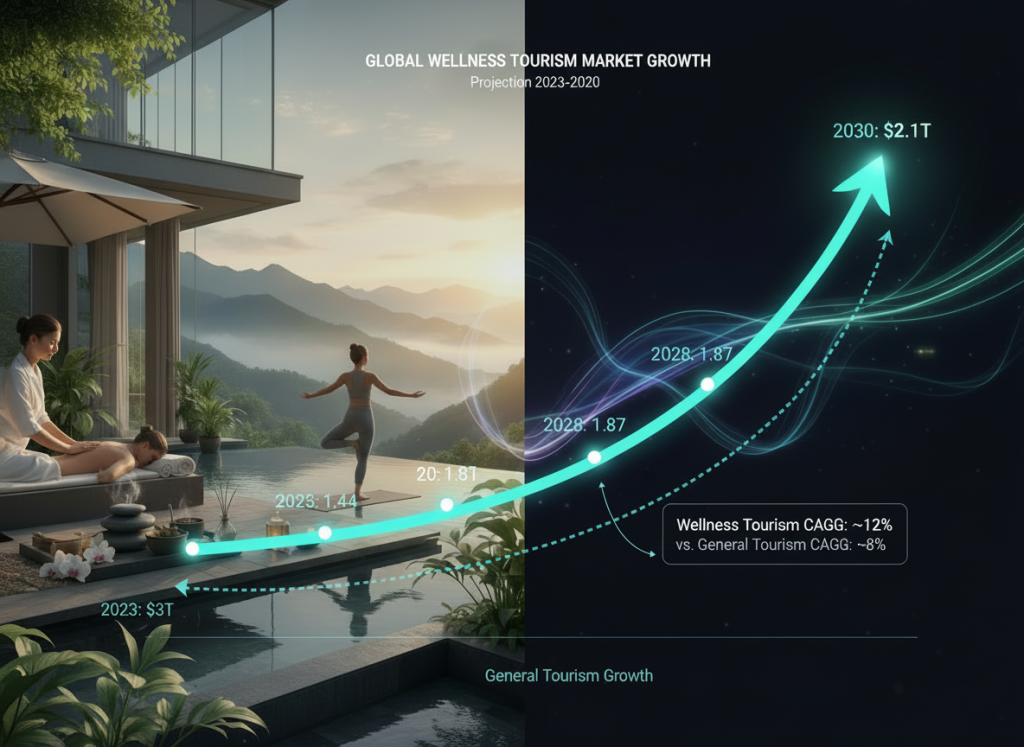
Wellness tourism has surpassed the trillion-dollar threshold and continues accelerating. This tailwind makes AI investments more defensible because the upside compounds: higher participation, higher willingness to pay, and higher lifetime guest value.
Related reading: Designing a Longevity-Focused Resort Experience Using Wearable Data and Lifestyle Monitoring AI: The Wellness Retreat Model for High-Sensitivity Populations.
What Modern Wellness Travelers Seek
- Personalized health optimization with measurable outcomes
- Sleep + stress recovery supported by data
- Longevity-focused retreats with evidence-backed programming
- Authentic nature and culture-based immersion
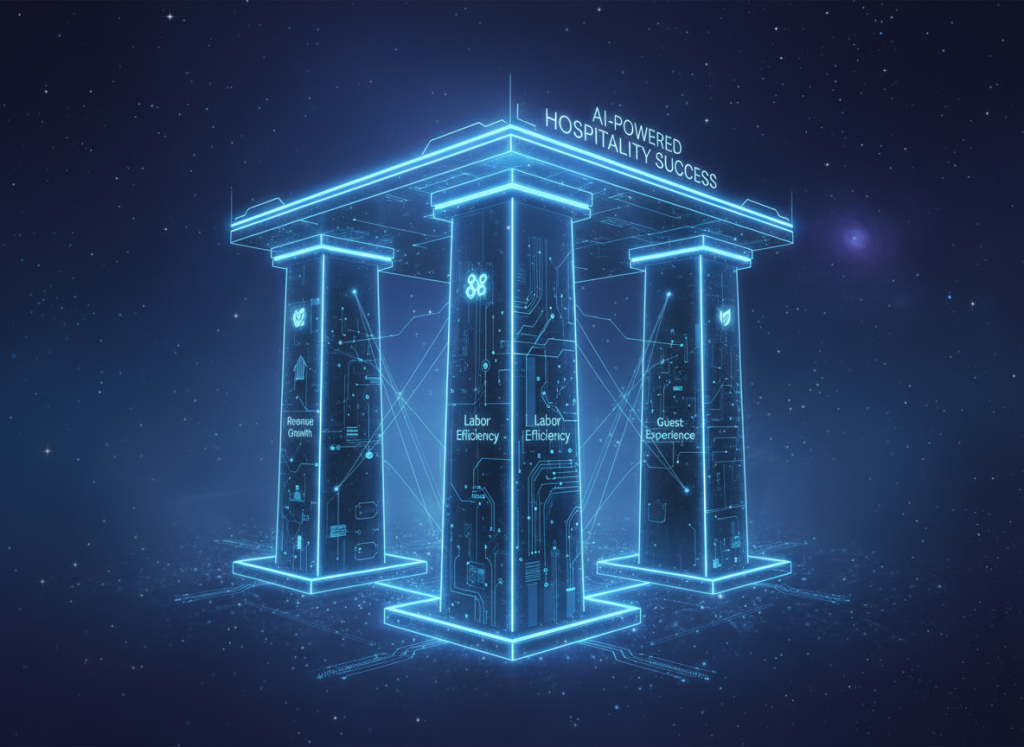
AI Delivers Hard ROI in Three Primary Areas
AI ROI in hospitality and wellness is strongest when positioned as an augmentation layer—not a replacement—automating repetitive coordination while strengthening the "human moments" guests remember.
Operational ROI is strongest when AI is implemented through disciplined workflow design. See: Workflow Automation: Practical AI That Saves Time and the broader Athena services framework.
Revenue Growth — 10–17% Uplift
- Spa Services: +12–22% upsell rate (wearable-informed treatment recommendations)
- Wellness Activities: +18–25% participation (personalized matching to readiness + preferences)
- Dining / F&B: +8–15% spend (nutrition recommendations aligned with goals)
- Booking Conversion: +20–35% close rate (AI concierge reduces friction + increases speed)
Labor Efficiency — 8–15 Hours Saved / Employee / Week
- Guest communications: 3–5 hrs/week saved (automated FAQs, confirmations, concierge triage)
- Scheduling: 2–4 hrs/week saved (demand-aware staffing and routing)
- Administrative work: 2–3 hrs/week saved (reporting, inventory alerts, shift planning)
Guest Experience: NPS +6 to +12 Points
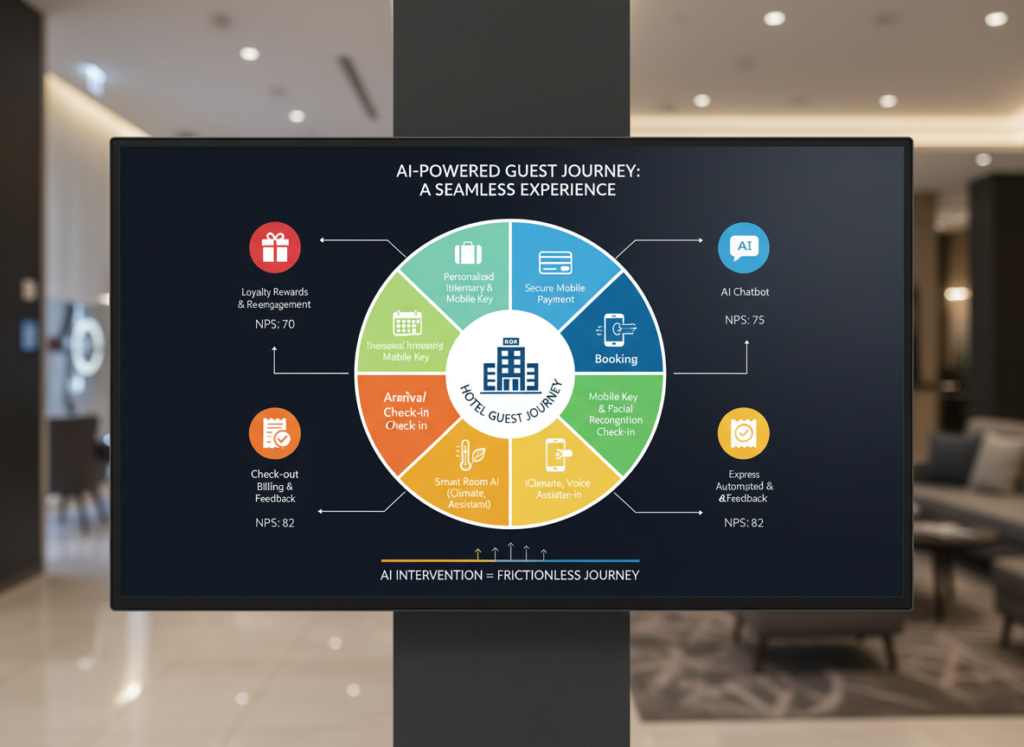
NPS gains come from friction removal: faster responses, fewer bottlenecks, smoother check-in/out, and consistent recognition of preferences. When guests feel seen and served before they even ask, loyalty compounds naturally.
The frictionless journey map opposite illustrates exactly where AI removes pain points across the complete guest arc—from initial discovery through post-stay follow-up.
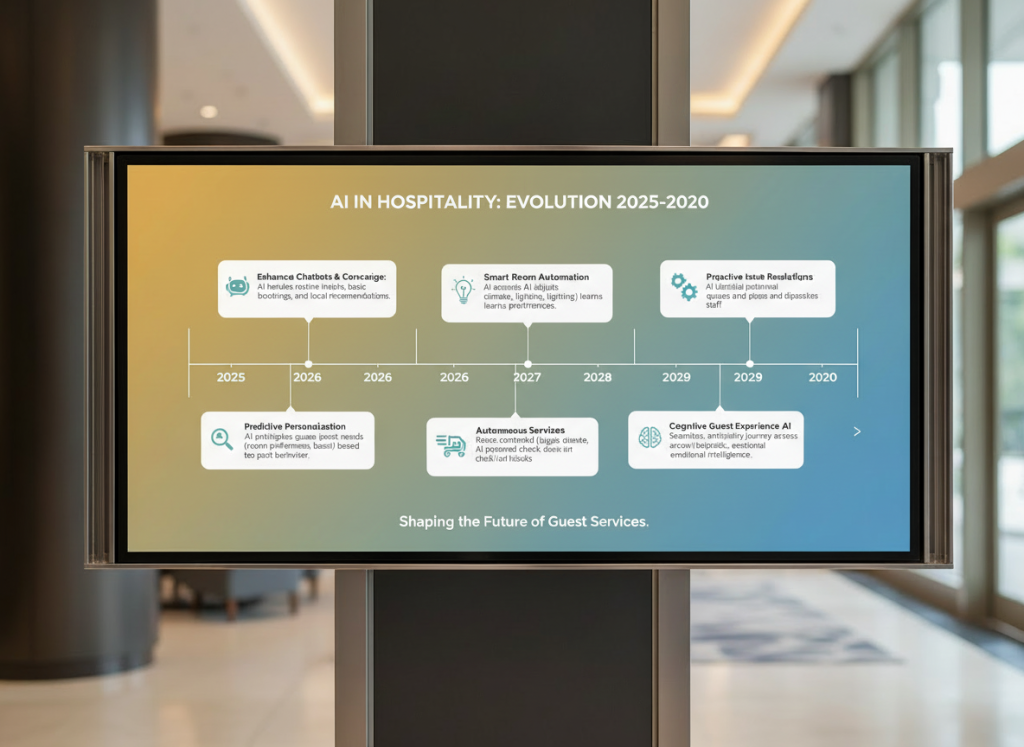
The AI Advantage Intensifies in 2025–2030
The next wave is system-level integration: wearable data → dynamic itinerary personalization → revenue and retention compounding. Leaders will differentiate via measurable outcomes and consistently excellent execution.