AI for Luxury Resort Executives: Strategy, Use Cases, and Implementation
A flagship guide within the Athena Fusion Solutions AI Core ecosystem, designed to help leaders, professionals, and serious beginners understand what artificial intelligence is, how it works, where it creates value, and why trust, system design, and human oversight matter.
This page serves as a core entry point into Athena’s broader AI Core offering—connecting foundational understanding with practical applications, trust architecture, sector-specific use, and advanced system thinking.
Want to Apply This to Your Organization?
Athena Fusion Solutions provides strategic advisory to help organizations implement AI with clarity, governance, and measurable outcomes.
Request a Strategy DiscussionWhat This AI Core Guide Covers
This guide moves from foundational understanding to system design, practical use, sector applications, and forward-looking AI capabilities.
Executive Summary
- AI is not a single tool—it is a decision-support layer that transforms operational data into actionable intelligence.
- Organizations that deploy AI strategically achieve 10–30% efficiency gains and measurable improvements in customer experience.
- The highest ROI comes from workflow automation, personalization, and predictive insights—not standalone chatbots.
- AI must be implemented with human oversight to preserve trust, brand integrity, and service quality.
- Leaders should approach AI as a system-level transformation, not a technology purchase.
What Artificial Intelligence Actually Is
Artificial intelligence is best understood as a layered system that converts raw data into decisions, predictions, and automated actions.
At its core, AI combines data, statistical models, and computational systems to identify patterns and generate outputs that support or automate human decision-making.
For leaders, AI is not about algorithms—it is about improving outcomes across operations, customer experience, and strategic planning.
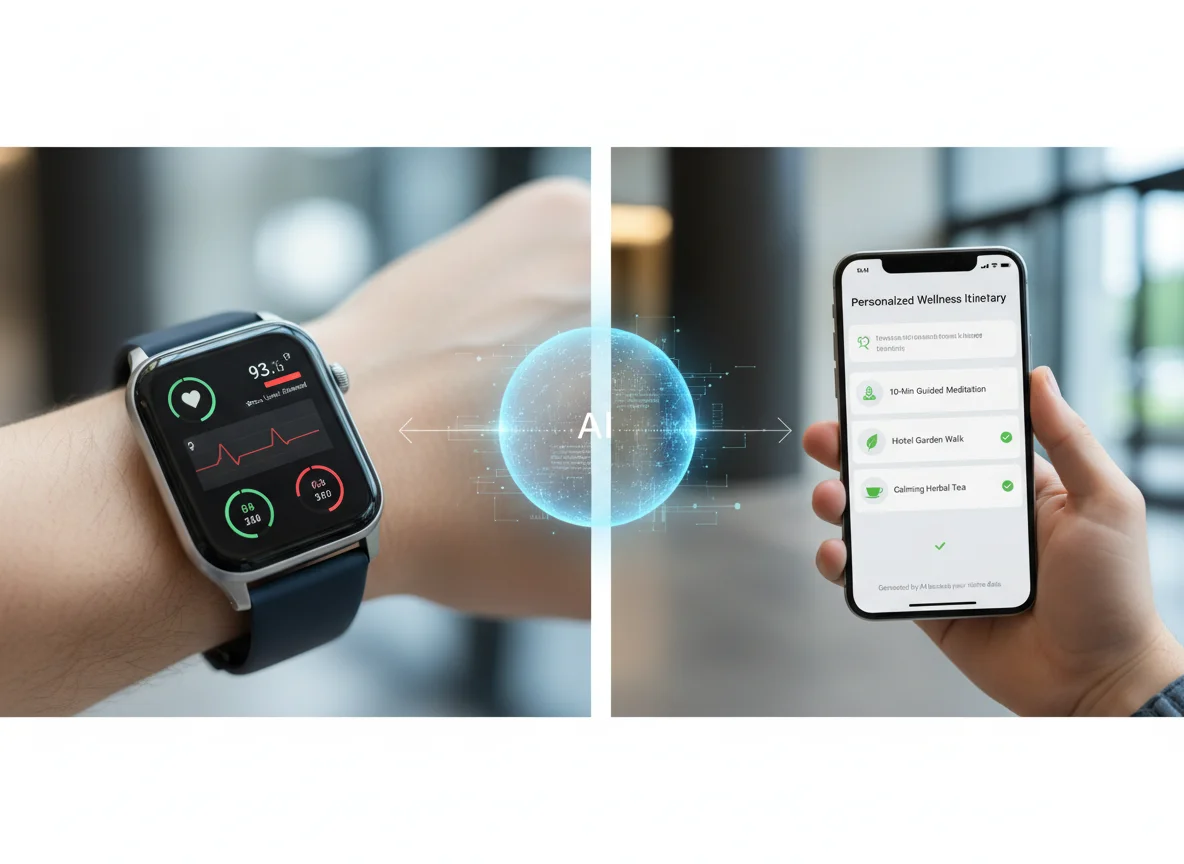
Figure 1. AI as a system: data inputs, intelligence layer, and decision outputs.
What AI Is Not
- AI is not autonomous intelligence—it requires human-defined goals, data, and constraints.
- AI is not inherently accurate—its outputs depend entirely on data quality and system design.
- AI is not a replacement for people—it augments human capability when deployed correctly.
- AI is not a single product—it is an integrated system spanning data, models, workflows, and governance.
Misunderstanding these fundamentals is the primary reason organizations fail to achieve ROI from AI investments.
Where AI Creates Measurable Value
Workflow Automation
Reduces administrative workload by 30–50%, improving operational efficiency.
Personalization
Enhances customer experience through tailored recommendations and interactions.
Predictive Insights
Forecasts behavior, demand, and risk to enable proactive decision-making.
Decision Support
Provides leadership with real-time intelligence across complex systems.
How Artificial Intelligence Systems Work
Artificial intelligence systems learn patterns from data and use those patterns to generate predictions, recommendations, or classifications.
When an AI system receives information, the data is first processed into a form the model can analyze mathematically. The model then evaluates patterns, relationships, and context using multiple internal layers.
Based on patterns learned during training, the system produces an output such as text, a recommendation, a classification, or a decision. Safety layers and alignment methods help reduce harmful or low-quality results before they reach the user.
Hover over each block in the interactive diagram to see what role it plays in the overall AI process.
Audio · Data
~¾ word per token
Relevance focus
Network
parameters
Image · Decision
Data
examples
Loop
improve
Layer
Alignment
OUTPUT
The final response produced by the model.
How Strong AI Systems Improve Trust
Reliable AI does not come from the model alone. It comes from a system that combines generation, retrieval, validation, and human oversight.
A language model alone can produce fluent answers, but fluency is not the same as accuracy. Trust improves when the system can retrieve grounded information, apply validation logic, and route decisions through human review when needed.
This is why enterprise-grade AI is built as an architecture rather than a single tool. The model contributes speed and pattern recognition. Retrieval contributes grounding. Human oversight contributes judgment, accountability, and context.
This architecture is especially important in healthcare, hospitality, research, and other environments where decisions affect safety, experience, compliance, and organizational credibility.
Most AI Failures Are Not Model Failures — They Are System Design Failures
The difference between experimentation and real value comes from how AI is integrated into workflows, data systems, and decision processes.
Athena works with organizations to design AI systems that are reliable, measurable, and aligned with real operational goals.
Explore Advisory ServicesExecutive Summary (PDF)
Download a concise executive version of this AI Core guide, including key frameworks and strategic insights.
Error: Contact form not found.
The AI System Model
AI delivers value only when integrated into a complete system—not as isolated tools.
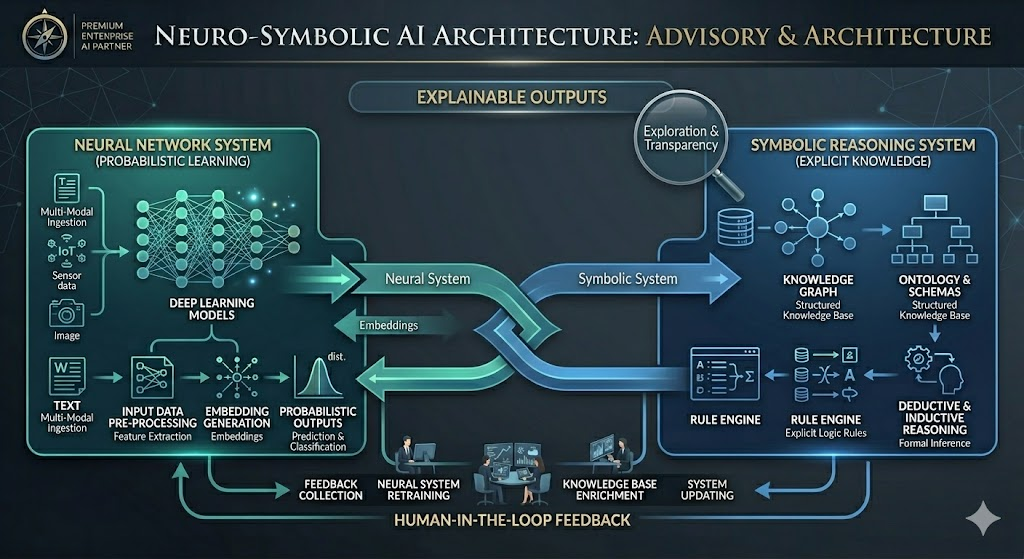
Figure 2. AI system architecture integrating data, intelligence, workflows, and human oversight.
How Leaders Should Approach AI
- Start with outcomes: Define measurable business objectives before selecting technology.
- Focus on workflows: AI creates value when embedded into operations, not isolated tools.
- Ensure data readiness: Clean, structured data is the foundation of all AI success.
- Maintain human oversight: Preserve trust, quality, and brand integrity.
- Deploy incrementally: Begin with targeted pilots and scale based on results.
How AI Applies Across Real Operating Environments
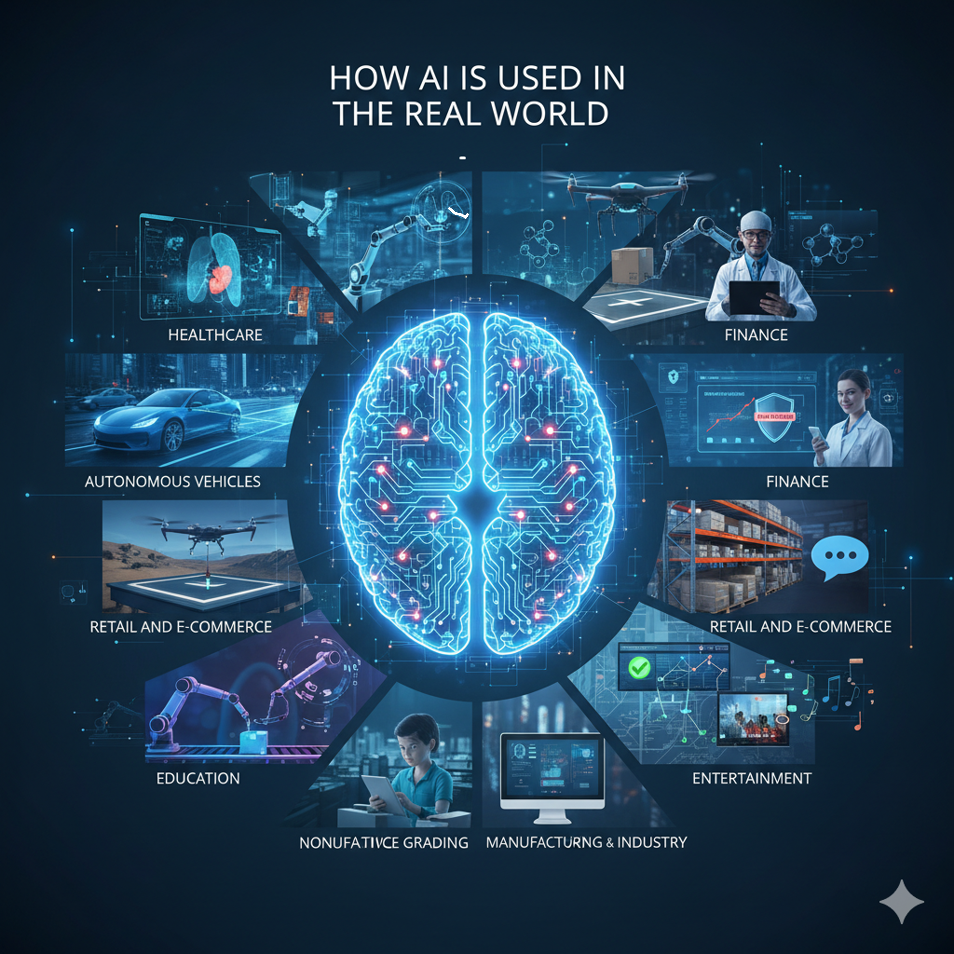
Artificial intelligence creates the most value when it is applied to real workflows, measurable business objectives, and environments where human judgment still matters. The following examples show how AI can support decision making, efficiency, personalization, and service quality across sectors that are highly relevant to Athena Fusion Solutions.
How AI Is Used Across Real Operating Environments
AI is already being used across business, healthcare, hospitality, and other sectors to automate workflows, improve analysis, and strengthen decision support.
In practical settings, AI helps organizations reduce repetitive work, improve responsiveness, identify patterns in complex data, and deliver more personalized experiences.
Its value becomes most visible when it is applied to real workflows— such as customer service, documentation, forecasting, marketing support, and operational coordination—rather than treated as a standalone tool.
The following examples show how these capabilities are being applied across several important sectors.
Different Types of AI Systems in Practical Use
Artificial intelligence is not one single tool. In practice, most people encounter a few major categories of AI systems, each designed for a different kind of task.
- General AI assistants: answer questions, summarize, draft, and support everyday work.
- Agentic AI: plans steps, uses tools, retrieves information, and completes multi-stage tasks.
- Multimodal AI: works across text, images, audio, video, and documents.
- Reasoning-focused AI: supports more structured analysis and problem solving.
- Small / efficient AI: optimized for lower cost, faster response, or local deployment.
- Domain-specific AI: tuned for industries such as healthcare, retail, hospitality, and finance.
What These Categories Mean in Practice
The most familiar form of AI for many people is the general AI assistant: a system that answers questions, drafts content, summarizes information, and supports everyday work. These systems are commonly used in customer support, writing assistance, search, reporting, and internal productivity.
Agentic AI goes a step further. Instead of simply responding to one prompt, it can plan a sequence of actions, use tools, retrieve information, and complete multi-step tasks. Examples include workflow automation, research assistants, scheduling systems, and AI systems that interact with business software.
Multimodal AI can work with text, images, audio, and documents together. Reasoning-focused AI is designed for more structured analysis and problem solving. Small efficient models are useful when lower cost, faster speed, or local deployment matters.
Domain-specific AI is tailored for particular industries such as healthcare, retail, hospitality, finance, and engineering. The key idea is that AI is not a single technology, but a family of systems with different strengths, costs, and levels of autonomy.
A simple way to think about it: some AI systems mainly answer, some analyze, some see and hear, and some can take action across multiple steps.
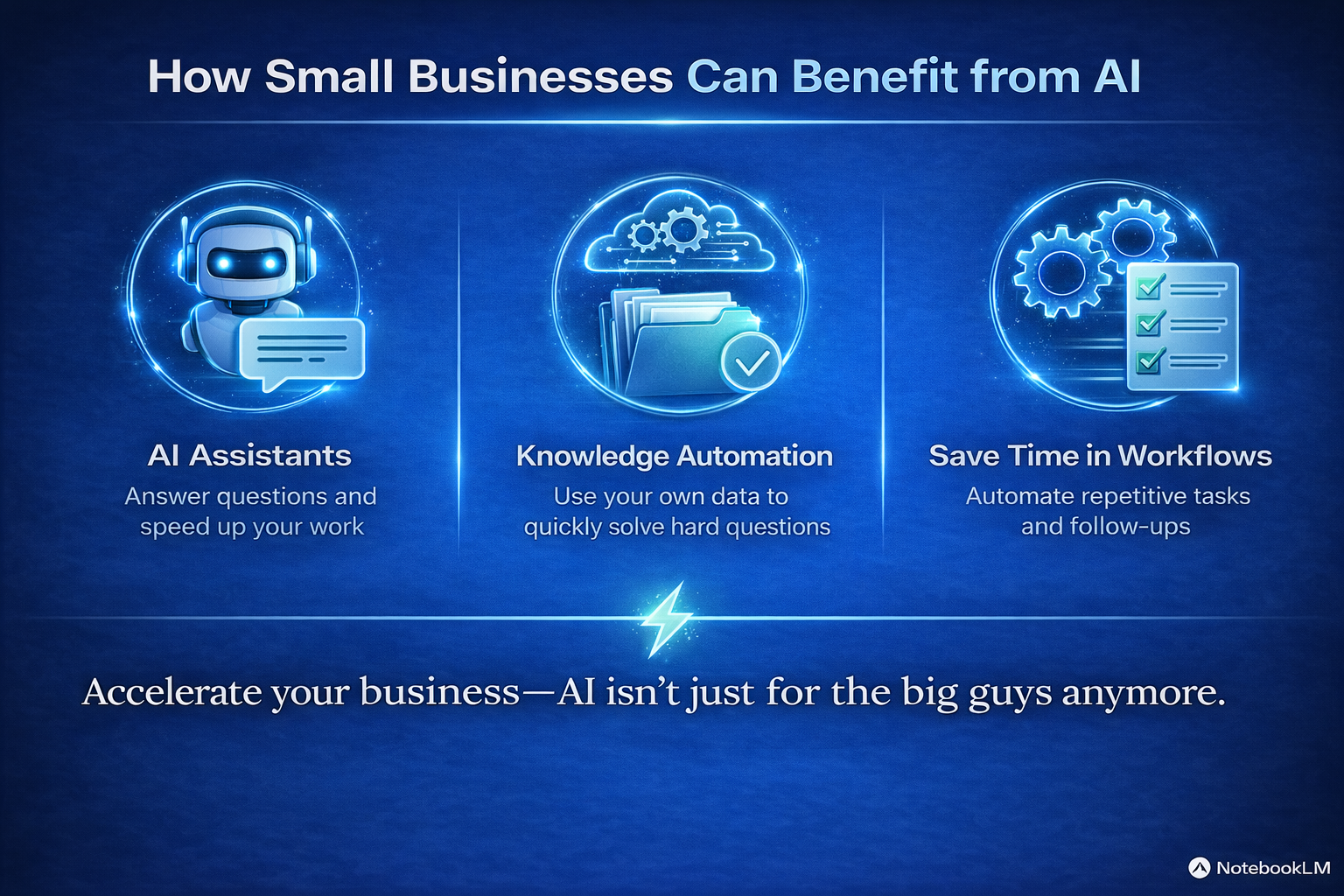
AI for Small Business: Practical Gains in Efficiency and Decision Support
Artificial intelligence is giving small businesses access to capabilities once associated with much larger enterprises, including automation, customer engagement support, and data-informed decision making.
In practical terms, AI can assist with customer inquiry handling, lead qualification, marketing content creation, sales trend analysis, reporting support, and repetitive administrative workflows.
These capabilities can reduce manual workload, improve responsiveness, and help owners and managers focus more of their time on customer relationships, growth strategy, and service quality.
The strongest outcomes typically come not from isolated AI tools, but from integrating AI into repeatable workflows with clear objectives, governance, and human oversight.
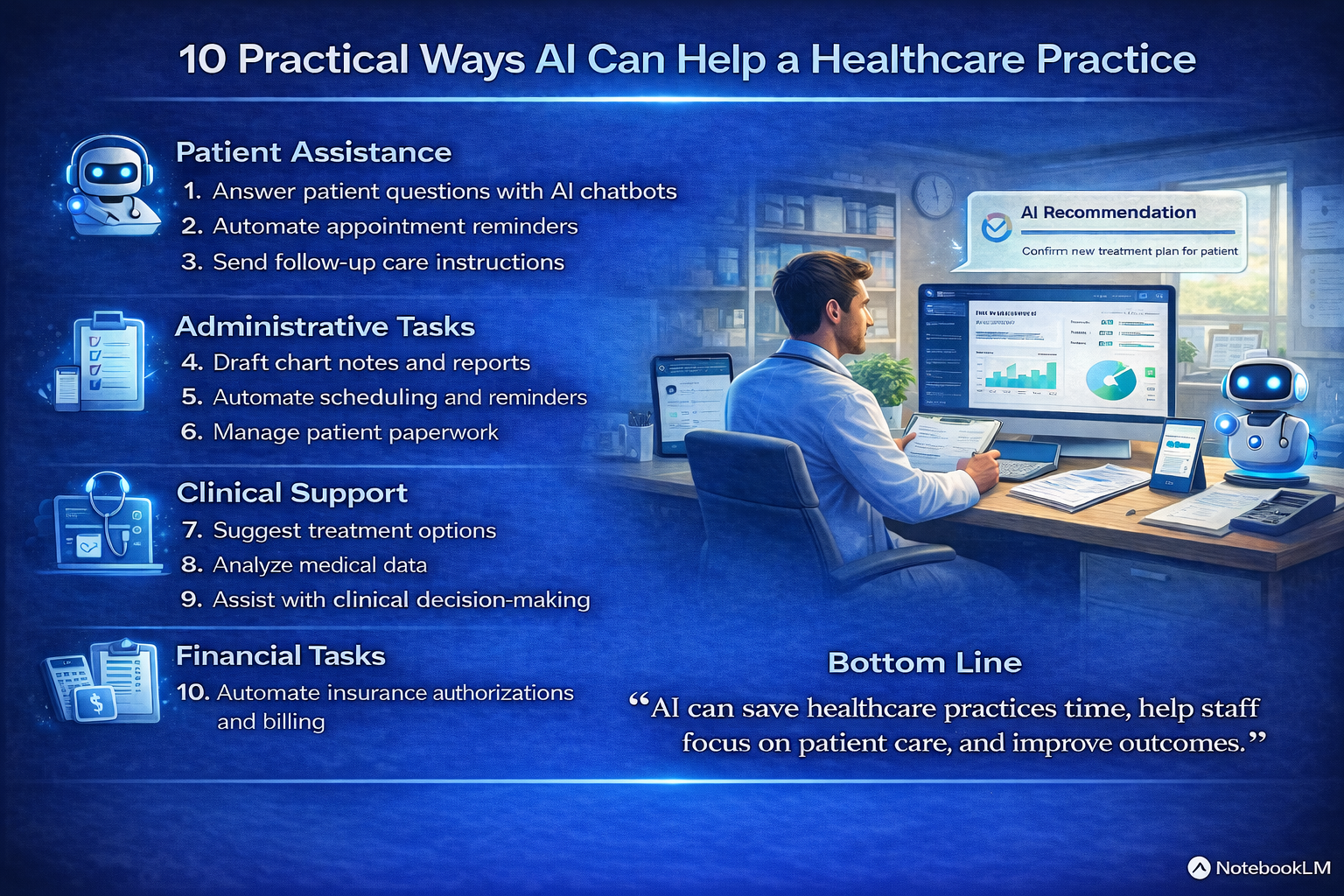
AI in Healthcare: Insight, Coordination, and Decision Support
AI supports clinicians and healthcare systems by improving information flow, identifying patterns, and reducing administrative burden.
Use cases include clinical documentation support, diagnostic analysis, patient communication, scheduling optimization, and risk identification.
AI is most valuable when it reduces friction in complex workflows while keeping clinicians in control of decisions.
The goal is not automation of care, but augmentation of expertise through better information and timing.
AI in Hospitality: Personalization and Operational Intelligence
AI enhances guest experience while improving operational efficiency and preserving the human touch that defines premium hospitality.
Applications include personalized guest communication, itinerary recommendations, staffing coordination, demand forecasting, and workflow automation.
These systems improve responsiveness, reduce friction, and enable more consistent service delivery.
The strategic opportunity is designing systems where AI supports— not replaces—the human experience.
AI for Wellness and Longevity: Personalized and Adaptive Systems
AI connects wearable data, behavioral patterns, and system intelligence to deliver more personalized and adaptive wellness support.
Use cases include recovery tracking, sleep analysis, stress monitoring, adherence support, and fatigue prediction.
These systems allow organizations to move beyond static programs toward dynamic, data-informed wellness models.
The value comes from the full ecosystem—data, models, workflows, and human guidance working together.
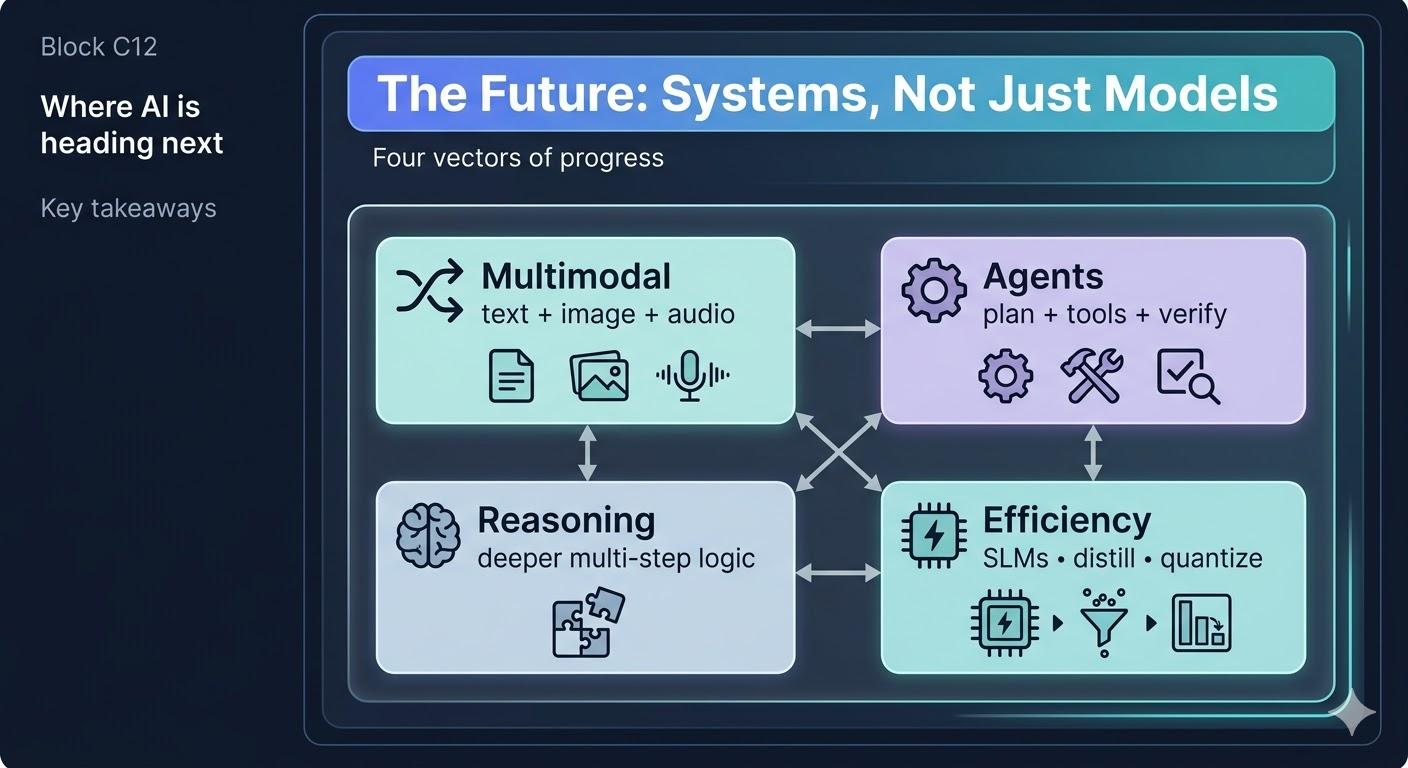
Where AI Is Heading Next
The next phase of AI is less about a single model becoming smarter and more about building complete systems that can work across different types of information, reason through more complex problems, and operate efficiently in real-world environments. In practice, AI is moving toward multimodal capability, agent-based workflows, stronger reasoning, and lower-cost deployment closer to where data is created and used.
- Multimodal AI will work more naturally across text, images, audio, and video.
- Agentic AI will increasingly plan steps, use tools, and complete workflow tasks.
- Reasoning models will improve performance on multi-step analysis and decision support.
- Efficiency advances such as smaller language models, distillation, and quantization will make AI faster and more practical to deploy.
For organizations, the strategic implication is clear: value will come not from isolated tools, but from integrated systems that combine models, data, workflows, governance, and human oversight.
This page curates beginner-friendly AI references chosen for clarity, credibility, and practical value. It is designed to help new learners build understanding in the right order: concepts first, effective use second, and technical depth only when needed.
Recommended AI References for Beginners
The fastest way to build real AI literacy is not to read everything. It is to start with a small set of strong references that explain core concepts clearly, teach practical use, and build confidence without unnecessary technical overload.
How to Use This Page
This reference guide is organized for beginners who want to understand artificial intelligence, learn how to use modern AI systems effectively, and develop a practical foundation before moving into more advanced technical material.
The references below are grouped by learning goal: concept first, tool use second, prompting third, and technical depth only after the basics are solid.
Best First References for Absolute Beginners
1. Elements of AI
Best first stop for non-technical learners
This is one of the strongest starting points for beginners because it is designed for people who want to understand what AI is, what it can and cannot do, and how it affects society without needing a technical background.
Recommended for: executives, managers, educators, healthcare professionals, small business owners, and general readers.
Reference: Elements of AI / Introduction to AI
2. OpenAI Academy + ChatGPT 101
Best practical entry point for using AI productively
OpenAI Academy is useful for beginners who want to learn how to work with AI in practice. The ChatGPT 101 materials focus on using AI as a real work tool rather than treating it as a purely theoretical subject.
Recommended for: professionals, consultants, writers, analysts, and business users.
Reference: OpenAI Academy / ChatGPT 101 / Prompting resources
3. Google AI Learning Resources
Best short-form introduction to generative AI basics
Google’s beginner learning materials are a good supplement because they explain generative AI concepts clearly and in smaller units that are easy to absorb.
Recommended for: beginners who prefer short lessons and quick conceptual orientation.
Reference: Google AI / Learn AI Skills / Introduction to Generative AI
Best References for Prompting and Day-to-Day AI Use
4. OpenAI Prompting Resources
Best for practical prompting with mainstream AI tools
These materials are useful because they focus on the real skill of working with AI: writing better instructions, adding context, specifying format, and refining outputs.
Reference: OpenAI Academy Prompting materials
5. Anthropic Learn + Prompt Engineering Guides
Best for structured prompt thinking
Anthropic’s learning materials are especially strong when you want a more systematic explanation of prompt design, output control, structured instructions, and safer AI use.
Reference: Anthropic Learn / Prompt Engineering Overview / Best Practices
6. Google Prompt Design Guides
Best for prompt design from an enterprise workflow perspective
Google’s prompt-design materials are helpful for understanding specificity, context, output formatting, and iterative prompting in professional settings.
Reference: Google Cloud prompt engineering and prompt design guides
Best Structured Beginner Learning Paths
7. Microsoft Learn
Best structured modules for beginner progression
Microsoft Learn provides beginner-friendly modules on generative AI and agents, along with a longer “Generative AI for Beginners” course for learners who want a more structured path.
Reference: Microsoft Learn AI hub / Generative AI beginner modules
8. IBM SkillsBuild AI Fundamentals
Best for broad AI fundamentals with credential-oriented learning
IBM’s material is useful for learners who want a more formal fundamentals overview, including concepts such as natural language processing, computer vision, machine learning, neural networks, and AI ethics.
Reference: IBM SkillsBuild / Artificial Intelligence Fundamentals
Best Next Step for More Technical Beginners
9. fast.ai — Practical Deep Learning for Coders
Best for beginners with some coding experience
fast.ai is excellent, but it is not the best first stop for a complete beginner. It is better once someone has basic AI literacy and at least some comfort with coding.
Recommended for: technically curious learners, developers, engineers, and hands-on builders.
Reference: fast.ai / Practical Deep Learning for Coders
A Simple Beginner Path
- Start with AI concepts: Elements of AI
- Learn practical use: OpenAI Academy and ChatGPT 101
- Improve prompting skill: OpenAI, Anthropic, and Google prompt guides
- Add structured fundamentals: Microsoft Learn or IBM SkillsBuild
- Move to technical depth only when ready: fast.ai
Common Mistakes Beginners Make
- Starting with overly technical material before understanding core concepts
- Reading about AI without actually using AI tools in real tasks
- Confusing prompt tricks with genuine understanding
- Jumping into advanced model architecture before learning practical workflows
- Relying on random social media summaries instead of strong primary sources
Begin with Clarity, Then Build Capability
Strong AI literacy starts with a few carefully chosen references. For most beginners, the best path is to learn what AI is, practice using it productively, and only then move into deeper technical material.
Where to Go Next in the AI Core Flagship Offering
This foundation guide is intended to orient readers before they move into deeper parts of the AI Core ecosystem, including retrieval systems, reasoning models, safety frameworks, deployment architecture, and sector-specific strategic applications.
Next Technical Step
Move into reasoning models, RAG, vector databases, and AI system architecture.
Next Strategic Step
Explore trust, governance, workflow integration, and operational deployment planning.
Next Application Step
See how AI Core principles apply to healthcare, hospitality, wellness, and small business.
Explore AI Strategy, Wellness, and Luxury Resort Transformation
This hospitality resource cluster connects Athena Fusion Solutions’ work on luxury resort AI strategy, human-centered hospitality, wellness transformation, operational intelligence, sustainability, executive implementation planning, and the future of AI-enhanced golf ecosystems.
AI for Luxury Resort Executives
Executive overview of how AI can improve luxury hospitality strategy, operations, guest experience, and competitive positioning.
AI Strategy Consulting for Luxury Resorts
Strategic advisory support for resorts evaluating AI use cases, implementation pathways, governance, ROI, and executive decision frameworks.
Nordic Luxury Hospitality in Practice
Examines how Nordic hospitality principles combine wellness, sustainability, emotionally restorative environments, quiet technology, workforce support, and human-centered resort design.
Why HR Must Lead AI Transformation
Explores workforce-centered AI transformation in luxury hospitality, including staffing, training, operational culture, employee trust, retention, and service quality.
The Future of Golf with Generative AI
Exploring how artificial intelligence is transforming golf operations, luxury resort hospitality, turf management, mobile engagement, coaching intelligence, customer personalization, operational efficiency, and revenue optimization across premium golf ecosystems.
The Real ROI of AI in Wellness & Hospitality
Future analysis of measurable ROI opportunities from AI-enabled wellness operations, workforce optimization, personalization, predictive systems, and hospitality transformation.
90-Day AI Pilot Framework
A practical resort implementation model for testing one measurable use case before scaling AI across the property.
Designing a Longevity Resort
Future article on wellness, recovery, longevity programming, nature integration, and emotionally restorative resort design.
Return to the AI Strategic Hub
Explore the broader Athena Fusion Solutions resource center for AI strategy, technical foundations, healthcare AI, governance, enterprise architecture, and implementation planning.
AI Explained for Leaders
A clear, executive-level guide to understanding AI, its business impact, and how to apply it strategically within your organization.
Continue exploring the full AI framework and related materials
Continue Exploring AI Strategy & Technical Foundations
Foundational material clarifying how modern AI systems process information, represent meaning, generate outputs, and operate within broader strategic and applied environments.
Move from technical understanding to architecture, operating models, and implementation planning.
Request a Discussion