
Hospitality AI for Luxury Resorts: Strategy, Experience & ROI.
A strategic guide to using AI in luxury resorts to enhance guest experience, improve operational efficiency, and deliver measurable hospitality ROI.
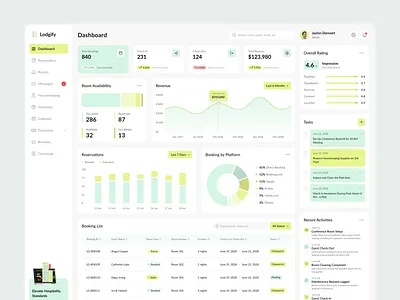
AI in Hospitality — A Strategic Operating System
This is not a collection of articles. It is a structured advisory system for luxury resort leaders—connecting strategy, guest experience, operations, and measurable ROI into a unified AI transformation model. Start here, then move through each layer based on your priorities.
AI for Luxury Resort Executives
Executive-level overview of where AI creates value across the resort ecosystem—guest experience, operations, workforce, and revenue optimization.
Designing a Longevity-Focused Resort
How wearable data, wellness programs, and personalization systems redefine luxury guest experiences and drive premium positioning.
Artificial intelligence is rapidly transforming luxury resorts, providing hospitality executives with new capabilities to personalize guest experiences, optimize operations, and improve profitability. Unlike traditional technology initiatives, AI in luxury hospitality must be implemented in a way that enhances — not replaces — the human service experience.
Where This Page Fits in the Athena AI Core System
This page is not a standalone article. It is one applied module within Athena’s broader AI Core System—a structured advisory framework designed to help leadership teams evaluate, prioritize, and govern AI across complex service environments.
Athena AI Core System
Strategic advisory architecture connecting leadership priorities, operating models, data flows, governance, and high-value AI applications.
Luxury Hospitality & Resort AI
Executive application of AI across guest experience, workforce enablement, service consistency, and operating performance.
Wellness, Longevity & Wearables
Human-centered intelligence for personalized experiences, biometrics-informed programs, and measurable wellbeing outcomes.
Workflow Automation & Decision Support
AI-enabled operating discipline across routing, coordination, reporting, and executive visibility.
Governance, Trust & Responsible Deployment
Brand protection, privacy, escalation logic, human oversight, and adoption frameworks for real-world deployment.
A System-Level View, Not an Isolated Use Case
Many firms present AI as a collection of disconnected ideas: a chatbot here, an automation there, a pilot somewhere else. Athena’s position is different. We frame AI as a strategic system—one that must align leadership priorities, service standards, workflow realities, data readiness, and governance discipline.
In that structure, luxury hospitality is one high-value application domain. It is important not because it is fashionable, but because it concentrates many of the conditions that make AI strategically valuable: premium service expectations, labor complexity, personalization demands, operational sensitivity, and brand risk.
AI in Luxury Hospitality Is a Leadership Decision
AI is already reshaping hospitality. The real decision for leadership teams is where it creates measurable value without compromising service culture, brand standards, or guest trust.
AI should not begin with vendor selection. It should begin with a disciplined executive assessment of revenue impact, operational leverage, guest experience, and implementation risk. In luxury environments, poorly structured deployments create fragmentation, staff resistance, and a guest experience that feels automated instead of elevated.
The strongest opportunities emerge where personalization, workflow coordination, service responsiveness, and commercial strategy intersect. When evaluated correctly, leadership teams can prioritize a focused set of high-value use cases, model the economics in advance, and move forward through controlled, low-risk pilots.
Athena’s position is clear: AI should be evaluated as a strategic business system—one that delivers measurable outcomes, aligns with the operating model of the property, and reinforces the human-centered standards that define luxury hospitality.
- Anchor decisions in measurable business value—not vendor narratives
- Prioritize a small number of high-impact use cases
- Model financial upside and operational cost before scaling
- Protect service quality while modernizing execution
How executive teams should evaluate AI
Before selecting platforms, leadership teams should determine whether AI improves commercial performance, reduces friction, and fits the standards of a luxury operating environment.
The Competitive Window Is Opening
Luxury hospitality is entering a period in which guest expectations, labor realities, and data complexity are converging. Executives are being asked to improve personalization, maintain premium service standards, contain operating pressure, and modernize decision-making at the same time.
AI is emerging as one of the few tools capable of helping leadership teams address all four pressures simultaneously. The resorts that move early and deliberately will be better positioned to shape guest expectations, strengthen internal coordination, and define their operating model before competitors do.
A 90-Day Pilot Model for Measured AI Adoption
AI should not begin with broad implementation. It should begin with a focused evaluation of where measurable value can be created, followed by a controlled pilot that produces real operating insight.
Discover
Start with executive priorities, operating realities, and service standards. Identify where AI can improve revenue, responsiveness, and efficiency without compromising experience.
- Map commercial and operational opportunities
- Identify workflow friction and system gaps
- Select high-value pilot candidates
- Define success metrics and constraints
Model & Prioritize
Convert opportunities into a business case. Focus on the few initiatives most likely to deliver measurable impact.
- Model revenue, cost, and timing
- Compare feasibility and service alignment
- Define pilot scope and assumptions
- Assess readiness and adoption risk
Pilot & Learn
Launch a controlled pilot. Measure outcomes, refine assumptions, and determine whether to scale.
- Execute pilot in a defined environment
- Track performance and service impact
- Adjust based on real data
- Decide: expand, refine, or stop
Why this model works in luxury hospitality
Luxury operators require precision, not experimentation. A pilot-first approach aligns innovation with service standards, staffing realities, and financial outcomes while minimizing risk.
Once leadership identifies priority use cases, the next step is to understand how AI fits into the broader resort operating model—across guest experience, workforce coordination, decision support, and data.
Hospitality AI Platforms for Luxury Resort Operations and Intelligent Guest Experience
Athena Fusion Solutions helps luxury hospitality organizations implement connected hospitality AI platforms, intelligent hotel management systems, operational analytics infrastructure, and guest experience technologies designed to improve efficiency, personalization, executive visibility, and measurable ROI.
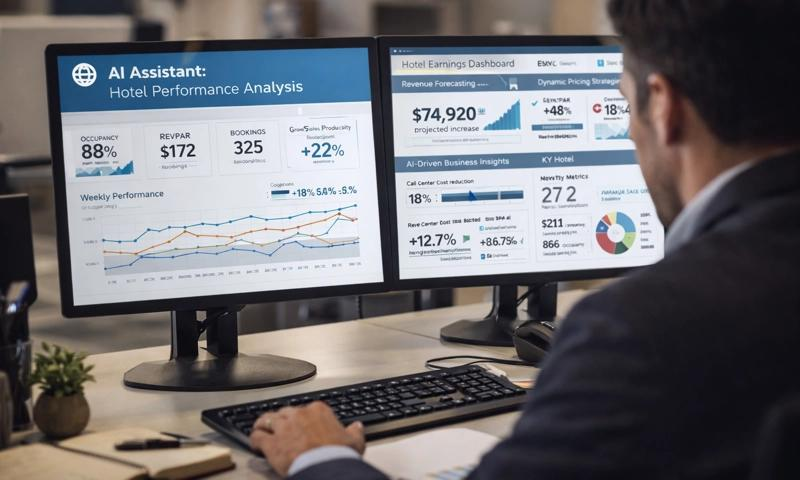
But architecture alone is not enough. In luxury hospitality, value depends on whether these systems operate under clear governance, human oversight, and service-protection rules.
Luxury Hospitality AI Operating Architecture
AI in luxury hospitality is not a single system deployment—it is a layered operating model. Value is created when guest experience, workforce operations, decision systems, and data are aligned under clear governance and service standards.
AI in Luxury Resorts: What Leadership Needs to Understand Now
Artificial intelligence is moving rapidly from experimentation to operational impact in hospitality. For luxury resorts, the opportunity is not simply efficiency—it is the ability to deliver highly personalized, consistent, and scalable guest experiences while improving workforce effectiveness and financial performance. The challenge is deploying AI without compromising the human standards that define premium service.
AI is a Leadership Decision
The adoption of AI is not a technology initiative. It requires executive alignment on where AI fits within guest experience, workforce design, and operating strategy.
Value Concentrates in Key Areas
The most immediate impact occurs in personalization, service response speed, workflow coordination, and revenue optimization—when aligned with brand standards.
The Risk is Misapplication
Poorly implemented AI can erode the guest experience, create staff resistance, and introduce brand risk. Precision and governance are critical.
Execution Requires Discipline
Successful organizations do not deploy AI broadly at first. They define priorities, run controlled pilots, measure outcomes, and scale deliberately.
Human-Centered Design is Essential
AI must enhance—not replace—human interaction. In luxury environments, the goal is elevation of service, not automation of experience.
This Page is Part of a Larger System
This briefing represents one module within the Athena AI Core System, demonstrating how AI is applied within a specific executive context.
Where AI Can Deliver Practical Value in Luxury Hospitality
These are not abstract possibilities. They are operationally relevant use cases that executive teams can evaluate for pilot deployment, measurable outcomes, and alignment with the guest experience.
AI Concierge & Guest Personalization
AI can help luxury resorts deliver more responsive, personalized, and context-aware guest engagement before arrival, during the stay, and after departure.
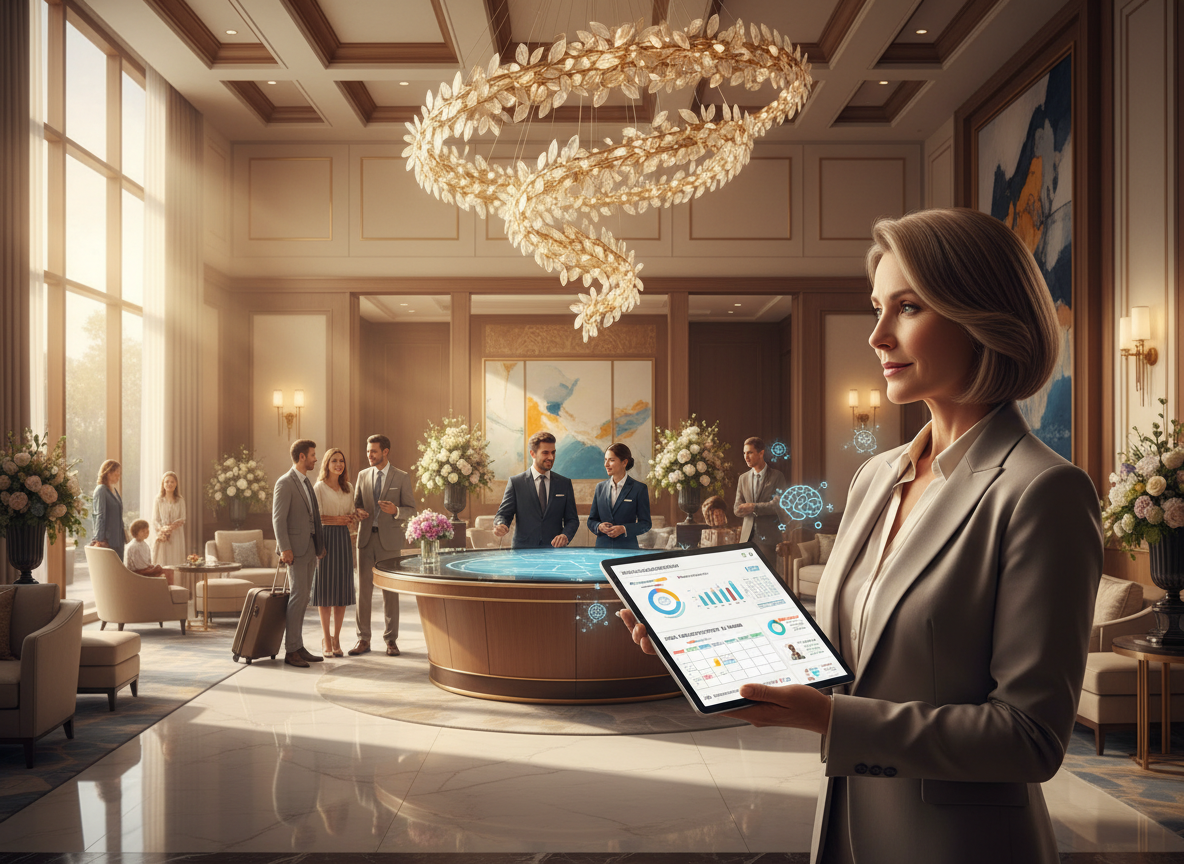
The Operational Foundation for AI in Luxury Resorts
AI does not create value in isolation. Its effectiveness depends on how well guest data, operational systems, and service workflows are connected across the resort environment. Many AI initiatives underperform not because of the models themselves, but because the underlying systems remain fragmented.
For luxury hospitality, the objective is not to replace core platforms. It is to establish a coordinated operating foundation in which AI functions as an intelligent experience and workflow layer—enhancing responsiveness, visibility, and personalization while preserving control and governance.
Where AI Creates Measurable Value in Luxury Resorts
In luxury hospitality, AI does not create value through novelty alone. Its importance lies in how it improves personalization, service responsiveness, workforce coordination, and executive visibility—while protecting the brand standards that define premium guest experiences.
Guest Personalization at Scale
AI can help resorts move beyond generic service delivery by identifying patterns in preferences, behaviors, timing, and prior interactions. This supports more relevant recommendations, better-timed engagement, and a stronger sense that the guest experience is being thoughtfully shaped rather than merely managed.
Faster, More Consistent Service Response
Luxury service depends on speed, continuity, and precision. AI can support routing, prioritization, escalation, and internal coordination so that requests are addressed more efficiently and with fewer breakdowns between departments. This is especially valuable where service quality can be affected by staffing variation or process friction.
Workforce Enablement and Service Support
In premium hospitality, AI should strengthen staff performance rather than displace it. Used properly, it can surface relevant context, standardize knowledge access, support training, and reduce low-value administrative load. That gives teams more capacity to focus on judgment, empathy, and high-touch service interactions.
Revenue Optimization and Offer Alignment
Resorts sit at the intersection of rooms, amenities, wellness services, dining, experiences, and premium upgrades. AI can help identify where guest needs and commercial opportunities align more precisely, allowing leadership to refine offers, improve conversion, and better coordinate monetization across the property without making the experience feel transactional.
Executive Visibility and Better Decision Support
One of AI’s most valuable roles is helping leadership teams see the business more clearly. When operational, guest, and service signals are interpreted effectively, executives gain better insight into where experience quality is rising or falling, where resources are misaligned, and where intervention can create measurable improvement.
Brand Protection Through Human-Centered Design
In luxury settings, not every process should be automated and not every guest interaction should be mediated by software. AI creates more value when it is introduced selectively, with clear escalation paths, human oversight, and alignment to brand tone. The objective is not automation for its own sake, but intelligent augmentation of the guest experience.
Luxury Resort AI Software and Hospitality Platform Success Stories
These hospitality AI platform examples demonstrate how luxury hotels and resorts are using intelligent guest experience systems, operational analytics, workflow automation, and connected hotel management technologies to improve efficiency, personalization, sustainability, and financial performance.
- +20% booking conversions
- +15% repeat bookings
- +40% guest engagement
- +50% concierge efficiency
- 74% call offload
- 70% FAQ automation
- Manual intervention 1%
- Reduced guest complaints
- +56% upsell revenue
- $39+ per room/month
- ROI doubled
- Higher guest satisfaction
- $1B+ cumulative cost savings
- 20%+ reduction in carbon intensity
- 20%+ reduction in water use intensity
- Global sustainability intelligence platform
- 100,000+ guest interactions
- $2.8M incremental revenue
- 24/7 concierge support
But architecture alone is not enough. In luxury hospitality, value depends on whether these systems operate under clear governance, human oversight, and service-protection rules.
Governance Defines Whether AI Strengthens or Erodes Trust
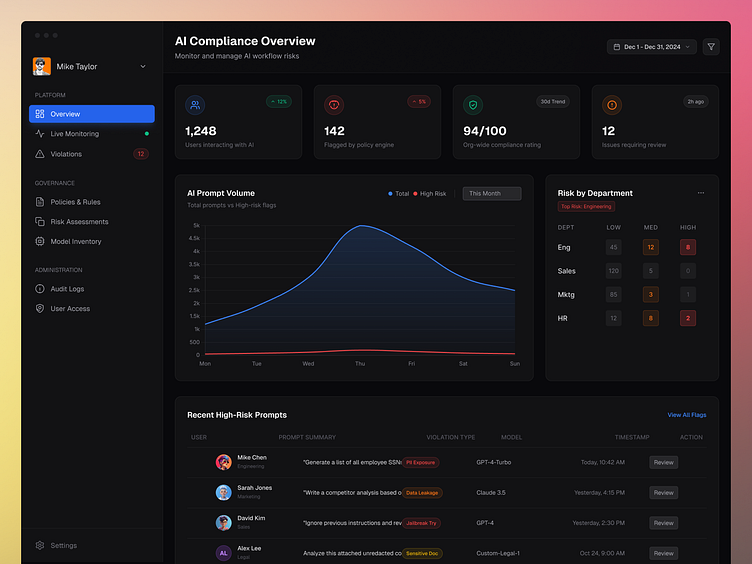
In the architecture above, governance is not a separate function—it spans every layer. It determines how decisions are made, how risks are controlled, and where human judgment must remain in control.
The primary challenge is not access to AI tools. It is ensuring that deployment decisions align with the service model, protect guest trust, and maintain workforce confidence. Without clear governance, even well-designed systems introduce operational and reputational risk.
Where AI Initiatives Fail in Luxury Hospitality
Most failures are not caused by technology limitations. They result from misaligned decisions, poor operating integration, and a lack of governance tied to the service model.
Selecting platforms before defining business value, service boundaries, and workforce impact leads to fragmented systems and low adoption.
AI affects guest experience, workforce design, and operational flow. Limiting ownership to IT removes it from the areas where value is created.
Automation in emotionally sensitive moments—service recovery, concierge interaction, personalization—erodes trust and perceived quality.
If employees perceive AI as surveillance or control, resistance increases and performance gains disappear regardless of system quality.
Without clear escalation paths, accountability, and human oversight, AI introduces risk into scheduling, pricing, and guest-facing decisions.
Expanding AI initiatives without measured pilot results leads to cost escalation, operational friction, and loss of leadership confidence.
A Practical Path to Executive AI Adoption
The strongest AI programs begin with focused pilots rather than enterprise-wide disruption. A disciplined pilot model allows leadership to test value, refine governance, and build internal confidence before scaling to broader operational use.
Identify Priority Use Cases
Select one or two high-value opportunities tied to guest communication, operations, or revenue visibility.
Define Success Metrics
Establish clear measures such as response time, staff efficiency, guest satisfaction, or conversion impact.
Run a Controlled Pilot
Introduce AI in a contained environment with executive oversight, policy guardrails, and operational review.
Scale What Works
Expand only after measurable value is demonstrated and the deployment aligns with service standards and brand identity.
From AI Exploration to Measurable Financial and Operational Impact
When applied selectively and governed properly, AI can deliver measurable improvements across guest experience, workforce efficiency, and revenue performance. These outcomes depend on use case selection, integration quality, and alignment with service standards.
Frequently Asked Questions About AI in Luxury Resorts
Luxury hospitality leaders are increasingly evaluating artificial intelligence, workflow automation, and connected operating systems to improve guest experience, operational efficiency, and executive visibility. Below are some of the most common questions resort executives ask when evaluating AI strategy for luxury hospitality environments.
How much does AI cost to implement in a luxury resort?
AI implementation costs in luxury hospitality vary depending on integration complexity, number of properties, existing systems, and operational goals. Small operational AI pilots may begin in the low five-figure range, while enterprise-wide AI ecosystems integrating PMS, CRM, guest apps, analytics, and workflow automation can scale significantly higher. Most successful organizations begin with focused 60–90 day pilot programs designed to demonstrate measurable ROI before expanding deployment.
What AI tools do luxury hotels and resorts use?
Luxury resorts increasingly use AI-powered guest personalization systems, predictive analytics dashboards, CRM intelligence platforms, workflow automation tools, AI concierge systems, dynamic pricing engines, IoT integrations, and operational intelligence platforms. Many organizations also deploy AI to improve housekeeping coordination, maintenance workflows, guest communications, and executive reporting.
How does AI improve guest experience in luxury hospitality?
AI improves guest experience by enabling personalized recommendations, faster service coordination, proactive issue resolution, intelligent guest communication, and operational consistency across departments. AI can help luxury resorts anticipate guest preferences, reduce friction during check-in and service requests, and free staff from repetitive administrative tasks so they can focus more directly on human interaction and high-touch hospitality.
Can AI integrate with existing hotel systems like PMS and CRM platforms?
Yes. Modern hospitality AI systems are typically designed to integrate with existing PMS, CRM, POS, guest app, IoT, and analytics platforms through APIs and middleware layers. The objective is usually not to replace core systems, but to create a connected operating foundation that improves data flow, workflow coordination, and executive visibility across the resort ecosystem.
What is the ROI of AI in luxury hospitality?
The ROI of AI in luxury hospitality may include increased guest satisfaction, higher guest retention, improved upsell conversion, reduced operational friction, lower labor inefficiencies, faster response times, and stronger executive decision-making. Organizations that approach AI strategically — with governance, workflow alignment, and measurable business objectives — typically see stronger operational and financial outcomes than organizations pursuing isolated AI tools without integration planning.
Is AI replacing employees in luxury resorts?
In most luxury hospitality environments, AI is being used to augment staff rather than replace them. The primary objective is often to reduce repetitive administrative burden, improve operational coordination, and allow hospitality teams to spend more time delivering personalized human experiences. Human-centered AI strategies are particularly important in luxury hospitality where guest relationships and service quality remain central to brand differentiation.
All case studies are based on verified vendor and published implementations across leading hospitality operators.
External References & Executive Resources
- Skift Research 2024 Outlook on AI in Travel and Hospitality Technology Trends. Access Research Portal
- AceCall AIThe Future of the Guest Experience: Hyper-personalization in Luxury. Read Report
- Harvard Business Review Strategic Frameworks for AI Marketing and Service Excellence. View HBR Article
- Hospitality Technology (HT) 2024 Lodging Technology Study: Benchmarking AI Adoption. Visit HT Magazine
- NIST AI Framework AI Risk Management Framework (RMF 1.0) for Governance. View Governance Standards
Strategic Insights for Luxury Resorts
Available Now
The Future of Golf with Generative AI →
Revolutionizing member engagement and performance coaching through bespoke AI architectures.
AI in Hospitality and Wellness →
Integrating longitudinal health data to deliver high-reliability personalized guest experiences.
AI-Driven Workflow Automation →
Optimizing resort operations and staffing visibility through the core principles of prompt engineering.
Coming Soon
Why HR Must Lead AI Transformation
Navigating the cultural shift and change leadership required for ethical AI adoption.
Designing the Longevity Resort
The architectural blueprint for the next generation of integrated wellness retreats.
AI Strategy for
Luxury Resorts
Executive frameworks, operational playbooks, ROI models, and experience design systems built specifically for luxury hospitality leaders navigating AI adoption.
Download AI for Luxury Resort Executives
Access the PDF version for offline review, internal circulation, or reference alongside the broader advisory materials.
Athena Fusion Solutions provides AI strategy consulting focused on luxury resorts, hospitality operations, wellness ecosystems, and human-centered guest experiences. We help organizations move from fragmented experimentation to measurable operational and guest-focused outcomes.
AI Strategic Hub
How AI Works Technical Foundations AI Architecture RAG & Edge AI Governance & DeploymentHospitality AI
AI for Luxury Resort Executives Resort AI Strategy ROI in Luxury Resorts Nordic Hospitality Model The Future of Golf & AIStrategy & Insights
Why AI Projects Fail 90-Day AI Pilot Strategy Automation Strategy Longevity Resort DesignMove from AI Exploration to Hospitality Transformation
Schedule an executive AI briefing to evaluate operational efficiency opportunities, guest experience transformation, wellness personalization strategies, and measurable ROI use cases for luxury hospitality organizations.
Request Executive Briefing