Go Deeper into AI Strategy, Architecture, Governance, and Applied Systems
Artificial intelligence (AI) is transforming how organizations operate, make decisions, and deliver value. But understanding how AI works — and where it delivers measurable impact — requires more than surface-level explanations. This AI Core page provides a structured, executive-level breakdown of AI systems, including how machine learning models are trained, how modern architectures like large language models function, and how organizations can move from experimentation to real-world implementation.
Explore the AI Strategic Hub
Continue into the full Athena Fusion AI Strategic & Education Hub, including technical foundations, mathematical concepts, RAG and edge AI architectures, governance frameworks, and executive-level implementation guidance.
Explore the AI Strategic Hub →Apply AI with Executive Clarity
Understanding AI is only the first step. The next step is identifying where AI can improve operations, reduce friction, strengthen decision-making, and produce measurable ROI without creating unnecessary complexity or unmanaged risk.
Request an Executive AI Briefing →Athena Fusion Solutions provides AI strategy consulting, executive education, implementation planning, and governance-first advisory support for organizations evaluating practical artificial intelligence adoption.
How AI Works: From Data to Prediction, Inference, and Feedback
Artificial intelligence works by using data, machine learning models, and feedback loops to identify patterns and generate useful outputs. Modern AI systems do not “think” like humans. They analyze relationships in data and produce predictions, classifications, recommendations, or generated content based on learned statistical patterns.
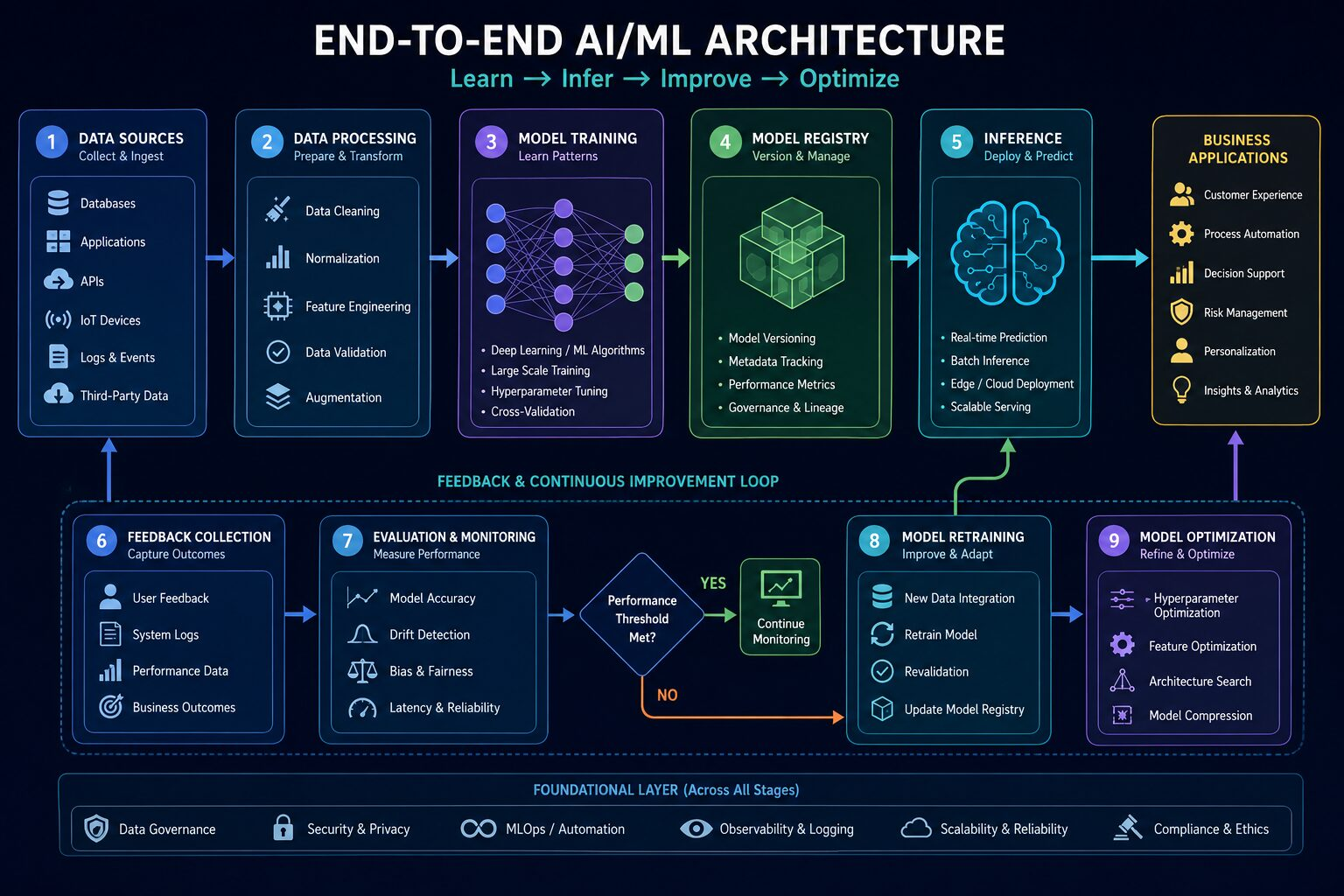
In practical terms, AI systems move through three major stages: training, inference, and refinement. During training, the model learns from examples. During inference, it applies what it has learned to a new input. During refinement, feedback is used to improve performance, reliability, and alignment with human goals.
- Training: AI models learn patterns from structured and unstructured data.
- Inference: The system generates outputs from new inputs using learned relationships.
- Feedback: Human review, monitoring, and performance data improve future results.
AI System Architecture: How Modern AI Moves from Data to Decision
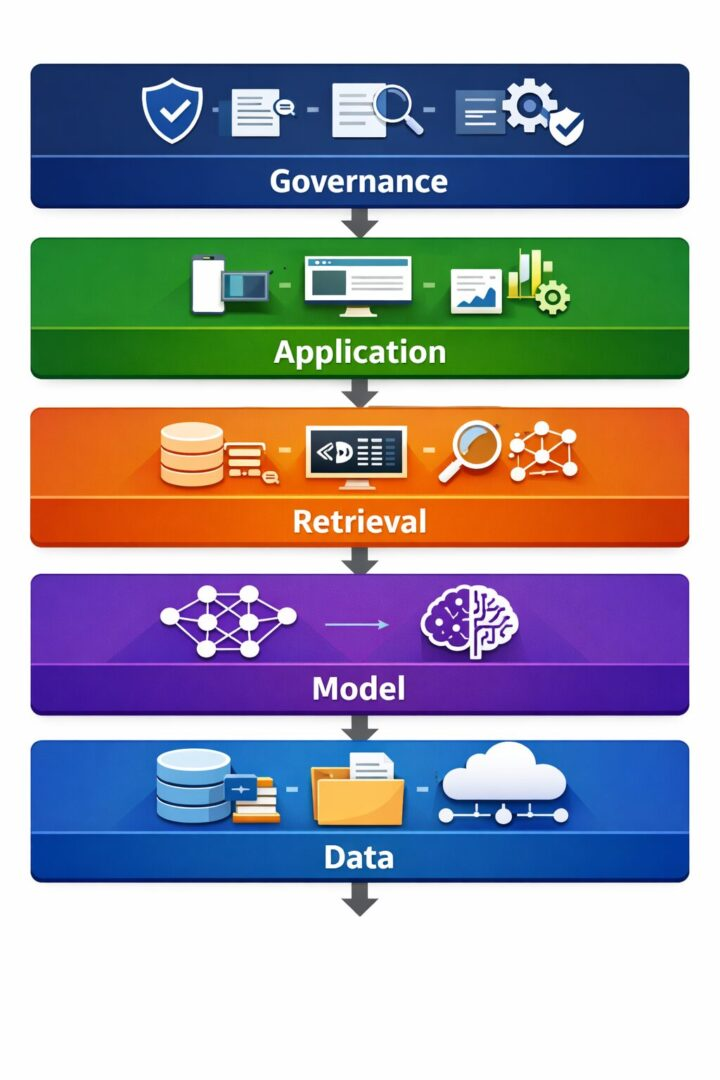
AI system architecture describes how data pipelines, machine learning models, retrieval systems, applications, monitoring tools, and governance controls work together. In real organizations, AI is not a single tool. It is an integrated operating layer that must connect with business workflows, customer data, enterprise systems, and human decision-making.
Strong AI architecture improves reliability, reduces hallucinations, protects sensitive data, and enables measurable performance tracking. This is especially important in enterprise AI, healthcare AI, and hospitality AI, where accuracy, trust, and governance directly impact outcomes.
Limitations of AI: Why Human Oversight and Governance Still Matter
Artificial intelligence can improve productivity, decision support, automation, and personalization, but AI systems also have important limitations. They can produce inaccurate outputs, reflect bias in training data, misunderstand context, or generate confident responses that appear correct but are not reliable.
These limitations are why AI strategy must include governance, validation, monitoring, and human oversight. Organizations that treat AI as a plug-and-play tool often face poor adoption, reputational risk, security exposure, and weak return on investment.

Where AI Delivers ROI: High-Impact Use Cases for Business and Operations
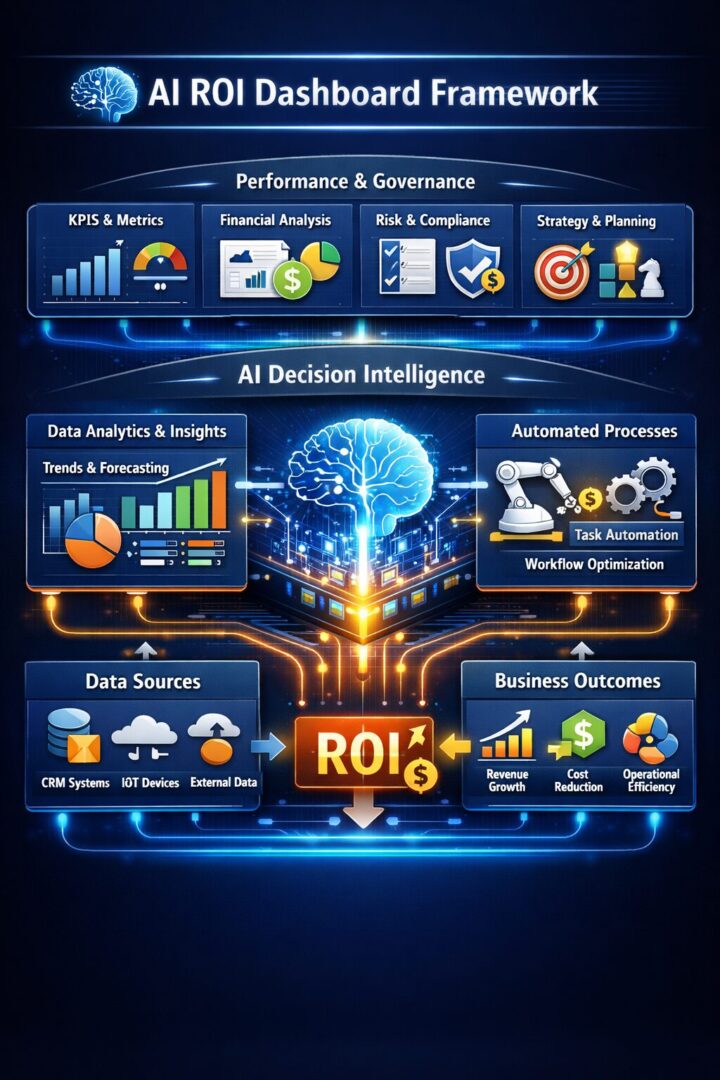
AI delivers the strongest return on investment when it is connected to measurable operational problems. The highest-value opportunities usually involve automation, forecasting, personalization, decision support, workflow coordination, and improved use of organizational knowledge.
Operational Automation
AI can reduce repetitive work, accelerate administrative tasks, improve routing, and support workflow automation across teams.
Decision Support
AI systems can summarize information, compare options, identify patterns, and support faster, better-informed decisions.
Customer and Guest Personalization
AI can help organizations anticipate needs, personalize service, recommend next actions, and improve experience quality.
Forecasting and Resource Planning
AI can improve demand forecasting, staffing alignment, inventory planning, scheduling, and operational readiness.