
Healthcare AI Systems

AI-Powered Prostate Cancer Ecosystem for Longitudinal Clinical Intelligence

Prostate cancer care is no longer limited to isolated diagnostics or treatment decisions. The future lies in connected, AI-driven systems that integrate clinical data, imaging, wearable monitoring, patient-reported symptoms, lifestyle interventions, and governance into a unified framework for better decision-making and improved quality of life.

Diagnostics
Treatment
Monitoring
Recovery
Governance
Table of Contents

Prostate Cancer AI Ecosystem Overview

This page explores how longitudinal healthcare intelligence architectures can integrate clinical workflows, AI systems, wearable monitoring, imaging analytics, genomics, survivorship intelligence, and interoperability frameworks into a unified prostate cancer ecosystem.

Foundation
  • • The Fragmentation Problem in Prostate Cancer Care
  • • Longitudinal Clinical Intelligence
  • • Unified Healthcare AI Architecture
  • • Clinical Workflow Integration
  • • EHR Interoperability & Data Integration
AI Systems
  • • AI Imaging & Digital Pathology
  • • Genomics & Predictive Analytics
  • • AI-Based Recurrence Prediction
  • • Clinical Decision Support Systems
  • • Multi-Modal Oncology Intelligence
Patient Intelligence
  • • Wearable Monitoring & Recovery Analytics
  • • AI-Driven Symptom Tracking
  • • Survivorship Monitoring
  • • Nutrition & Exercise Optimization
  • • Remote Patient Monitoring
Strategy & Governance
  • • Why Healthcare AI Systems Fail
  • • AI Governance & Compliance
  • • Healthcare AI Security Architecture
  • • Longitudinal Data Governance
  • • Future of AI in Oncology Care
Healthcare AI Architecture

The Fragmentation Problem in Prostate Cancer Care

Prostate cancer care generates enormous amounts of clinical, genomic, imaging, pathology, treatment, wearable, and patient-reported data. The problem is that most of this information remains scattered across disconnected systems, making it difficult to build a complete longitudinal view of the patient.

Disconnected Clinical Systems

EHR records, laboratory results, imaging, genomics, pathology, treatment history, and specialist notes often sit in separate workflows. Without integration, AI models lack the complete clinical context required for reliable decision support.

Missing Longitudinal Intelligence

Prostate cancer is not a single event. It is a long-term journey involving diagnosis, treatment selection, side-effect management, recurrence monitoring, survivorship, and quality-of-life optimization.

Isolated Patient-Generated Data

Wearables, mobile apps, fatigue tracking, exercise data, sleep patterns, HRV, and patient-reported outcomes can reveal important recovery signals, but they rarely connect meaningfully to clinical workflows.

Why Longitudinal Clinical Intelligence Matters

A prostate cancer AI ecosystem must do more than analyze isolated records. It should connect fragmented data into a continuous intelligence layer that follows the patient across diagnosis, treatment, recovery, monitoring, and survivorship.

This is where healthcare AI becomes strategically valuable: not as a standalone model, but as an integrated architecture that combines EHR data, imaging, pathology, genomics, wearable signals, and patient-reported outcomes into a governed clinical decision-support environment.

Longitudinal Healthcare Intelligence

Unified Prostate Cancer AI Ecosystem Architecture

This longitudinal healthcare AI architecture integrates EHR systems, imaging, genomics, pathology, wearable devices, patient-reported outcomes, and clinical AI models into a unified prostate cancer intelligence platform designed to support survivorship monitoring, predictive analytics, workflow integration, and personalized clinical decision support.

Longitudinal Healthcare Intelligence

Unified Prostate Cancer AI Ecosystem Architecture

This AI-powered prostate cancer ecosystem integrates EHR systems, imaging, genomics, pathology, wearable monitoring, patient applications, symptom tracking, and clinical AI models into a longitudinal healthcare intelligence architecture designed to support survivorship monitoring, workflow integration, predictive analytics, personalized treatment optimization, and clinical decision support.

AI-powered prostate cancer ecosystem architecture integrating EHR systems, imaging analytics, wearable monitoring, clinical workflows, patient applications, survivorship intelligence, and longitudinal healthcare AI.
CLINICAL–PATIENT APPLICATION ARCHITECTURE PROSTATE CANCER CARE PLATFORM · HOVER EACH BLOCK FOR DETAIL 🖥️ CLINICIAN APPLICATION CLINICAL INTERFACE 📱 PATIENT APPLICATION PATIENT INTERFACE INTERPLAY ⚙️ CLINICAL TIER MIDDLEWARE · ORCHESTRATION 🩺 PATIENT TIER MIDDLEWARE · PERSONALISATION 🗃️ PATIENT DATA EHR · LAB · GENOMICS 🎯 RISK MODELS CAPRA · DECIPHER · AI 🩻 IMAGING ANALYSIS MRI · CT · PI-RADS 🥗 NUTRITION PLANS AI · DIETITIAN VALIDATED 🏃 EXERCISE PLANS REHAB · PREHAB · ADT 📋 SYMPTOM TRACKING EPIC-26 · IPSS · NLP SYMPTOM TRACKING WEARABLE · PASSIVE ℹ INFORMATION Risk alerts · Reports · Imaging 📚 EDUCATION Videos · Plans · Guidance 👨‍⚕️ CLINICIAN 🧑‍💼 PATIENT DATA FLOW PRO FEEDBACK CLINICAL PATIENT DATA FLOW PRO FEEDBACK HOVER BLOCKS · DOTS = LIVE DATA FLOW
Figure 1 — Longitudinal prostate cancer AI ecosystem architecture integrating clinician applications, patient applications, EHR systems, imaging analytics, genomics, wearable monitoring, symptom tracking, survivorship intelligence, nutrition planning, exercise optimization, and AI-driven clinical decision support.
Clinical Validation & Industry Context

Why Longitudinal AI Matters in Prostate Cancer Care

Prostate cancer care generates large volumes of fragmented clinical, imaging, genomic, wearable, and patient-reported data across long treatment timelines. As survivorship increases, healthcare organizations face growing pressure to improve interoperability, workflow integration, longitudinal monitoring, and AI-assisted clinical decision support.

3.5M+

Prostate Cancer Survivors

More than 3.5 million men in the United States are living with prostate cancer, creating increasing demand for survivorship monitoring, longitudinal analytics, and coordinated clinical care.

Source: American Cancer Society
97%

Five-Year Survival Rate

High survival rates mean prostate cancer increasingly behaves like a chronic longitudinal condition requiring ongoing symptom management, recurrence monitoring, and quality-of-life optimization.

Source: National Cancer Institute
80%+

Healthcare Data Unstructured

Most healthcare information exists in fragmented and unstructured formats, including physician notes, imaging, pathology reports, wearable streams, and patient-reported outcomes.

Source: Industry Estimates / Healthcare IT
Massive

Growth in Wearable Data

Wearable platforms now generate continuous longitudinal biometric data including sleep, HRV, recovery, fatigue, activity, and cardiovascular metrics relevant to oncology survivorship.

Source: Digital Health & Wearable Market Research

The Strategic Shift Toward Longitudinal Clinical Intelligence

The future of healthcare AI is not simply about deploying isolated predictive models. It is about integrating fragmented clinical systems into governed longitudinal intelligence architectures capable of continuously monitoring patient status across diagnosis, treatment, survivorship, rehabilitation, and recurrence management.

In prostate cancer care, this requires interoperability between EHR systems, imaging, pathology, genomics, wearable devices, patient applications, and AI-assisted clinical workflows. Organizations that successfully integrate these layers may significantly improve operational visibility, survivorship optimization, clinician efficiency, and patient-centered decision support.

Clinical AI Applications

Real-World AI Use Cases in Prostate Cancer Care

AI-driven longitudinal healthcare systems are increasingly being applied across prostate cancer diagnosis, treatment planning, survivorship monitoring, recurrence prediction, imaging analytics, wearable monitoring, and personalized clinical decision support. The following examples highlight emerging real-world applications and validated healthcare AI capabilities relevant to integrated prostate cancer ecosystems.

📈

AI-Based Recurrence Prediction

AI systems are increasingly being used to monitor longitudinal PSA trajectories, imaging changes, pathology signals, and genomic patterns to identify early signs of prostate cancer recurrence before conventional workflows detect progression.

Mayo Clinic recently introduced the “PSA Control Tower,” an intelligent monitoring platform designed to continuously evaluate patient follow-up data and support earlier intervention through predictive analytics and longitudinal monitoring workflows.

View Mayo Clinic Reference →
🩻

AI Imaging & Digital Pathology

Deep learning systems are now being applied to prostate MRI, digital pathology, and histology workflows to improve lesion detection, tumor segmentation, PI-RADS scoring, and genomic inference from pathology slides.

Emerging AI pathology systems such as PATHOMIQ PRAD combine histology images, clinical variables, and genomic risk models to predict metastasis, biochemical recurrence, and treatment response.

View Prostate Cancer Foundation Reference →

Wearable-Based Survivorship Monitoring

Multi-modal AI systems are beginning to integrate wearable signals such as HRV, sleep quality, fatigue trends, heart rate recovery, physical activity, and symptom reporting into longitudinal oncology monitoring platforms.

Research into remote patient monitoring demonstrates the potential for AI-driven systems to identify adverse events earlier and improve survivorship monitoring between clinical visits.

View Research Reference →
🧬

Genomics & Personalized Risk Modeling

AI-assisted genomic analysis is increasingly being combined with PSA history, pathology findings, imaging, and longitudinal clinical data to support precision oncology and individualized treatment planning.

Multi-modal AI systems integrating genomic classifiers and clinical variables are showing improved prognostic accuracy for recurrence prediction and treatment stratification.

View Genomics Research →
📋

AI-Driven Symptom Tracking

Mobile applications integrated with AI and validated patient-reported outcome frameworks are being used to monitor fatigue, urinary symptoms, treatment side effects, quality of life, and survivorship progression.

Recent multicenter studies demonstrated high patient adherence and engagement using AI-enabled symptom monitoring platforms designed specifically for prostate cancer care.

View ESMO Reference →
🔬

Clinical Trial Matching

Large language models and clinical AI systems are increasingly being applied to automate clinical trial matching by analyzing electronic health records, pathology reports, genomic data, and eligibility criteria.

AI-assisted matching systems may significantly reduce manual review burden while improving patient access to emerging oncology therapies and precision medicine studies.

View ASCO Research →
Longitudinal Healthcare AI

Why Prostate Cancer May Become a Prototype for the Future of Healthcare AI

Most healthcare AI discussions focus on isolated tools such as ambient documentation, chatbot assistants, imaging interpretation, workflow automation, or scheduling optimization. These capabilities matter, but they may not represent the deepest transformation now emerging in healthcare.

The Deeper Shift: Longitudinal Intelligence

The larger opportunity is the development of longitudinal AI healthcare systems: continuously learning ecosystems capable of integrating clinical, physiological, behavioral, imaging, genomic, wearable, and survivorship data into adaptive intelligence models that evolve over time.

In this model, healthcare moves beyond fragmented encounters and begins to function as a continuously learning system that supports earlier intervention, personalized survivorship, predictive monitoring, and more adaptive care coordination.

Why Prostate Cancer Is Uniquely Positioned

Prostate cancer naturally generates long-duration, multimodal patient journeys that may span years or decades. A patient may move through active surveillance, imaging cycles, biopsies, surgery, radiation therapy, androgen deprivation therapy, recurrence monitoring, and survivorship management.

This creates an unusually rich data environment for AI because it combines oncology, imaging, pathology, genomics, endocrinology, aging, exercise physiology, wearable monitoring, and quality-of-life outcomes into one continuous care pathway.

Healthcare Data Fragmentation

The Core Challenge in Prostate Cancer AI Is Fragmented Healthcare Data

The greatest barrier to an effective AI ecosystem for prostate cancer care is not simply the quality of the algorithm. It is the structure of the healthcare data environment surrounding the patient. Most electronic health record systems were designed around documentation, billing, reimbursement, compliance, and clinical workflow — not continuous longitudinal intelligence.

As a result, prostate cancer data often remains fragmented across EHR records, pathology reports, imaging systems, genomic testing, PSA history, treatment notes, wearable devices, survivorship monitoring, and patient-reported outcomes. This makes it difficult to create a unified patient timeline capable of supporting predictive analytics, treatment personalization, and real-time clinical decision support.

For AI to improve prostate cancer outcomes, the underlying architecture must connect these data streams into a governed, interoperable, and clinically meaningful intelligence layer. Without that foundation, even advanced AI models inherit the fragmentation of the systems beneath them.

Current State

Prostate cancer data is often distributed across disconnected EHR records, imaging platforms, pathology reports, lab results, genomic tests, wearable devices, and episodic clinical encounters.

Strategic Gap

Healthcare AI cannot deliver full value without interoperable data layers, normalized clinical terminology, governance frameworks, longitudinal patient timelines, and workflow integration.

Future State

A prostate cancer AI ecosystem should create an intelligence layer above existing systems to support continuous monitoring, predictive analytics, treatment personalization, survivorship optimization, and human-centered care.

Why Prostate Cancer Requires a Longitudinal AI Systems Approach

Prostate cancer care has advanced dramatically in medical imaging, radiation oncology, robotic surgery, pathology, genomic analysis, and precision treatment planning. Yet many patients still experience fragmented healthcare coordination, limited longitudinal monitoring, inconsistent survivorship support, and insufficient personalization throughout recovery.

An effective AI ecosystem for prostate cancer care must integrate diagnostics, treatment planning, PSA trends, wearable monitoring, patient-reported symptoms, survivorship analytics, lifestyle interventions, and healthcare AI governance into a unified longitudinal intelligence framework capable of supporting continuous clinical decision support.

System Objectives

  • Improve AI-enabled clinical decision support for prostate cancer diagnosis and treatment
  • Predict fatigue, recovery decline, treatment intolerance, recurrence risk, and survivorship complications
  • Integrate imaging, pathology, genomics, PSA trends, wearables, and patient-reported outcomes
  • Support patient-centered prostate cancer recovery, monitoring, and survivorship optimization
  • Create interoperable longitudinal intelligence layers across fragmented healthcare systems
  • Improve quality of life, functional recovery, and treatment personalization during and after prostate cancer therapy
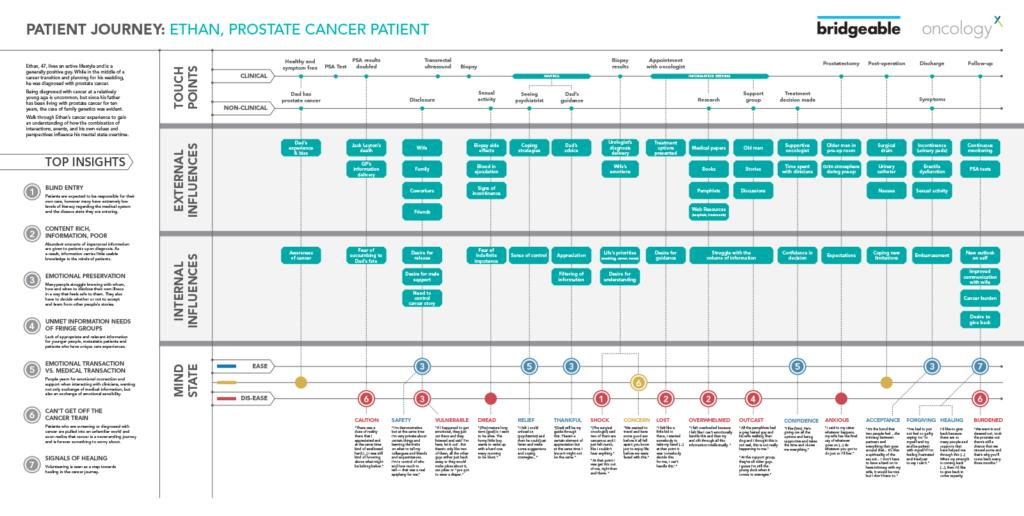
AI-enabled prostate cancer patient journey map showing longitudinal clinical monitoring, treatment decisions, emotional states, survivorship pathways, wearable integration, and clinical intelligence architecture
Figure 2 — Longitudinal Prostate Cancer Patient Journey and AI Clinical Intelligence Framework. This patient journey model illustrates treatment phases, clinical touchpoints, emotional states, survivorship transitions, and internal and external healthcare influences across the prostate cancer continuum. The framework supports AI-enabled clinical decision support, longitudinal patient monitoring, predictive analytics, risk stratification, and personalized survivorship optimization.
Why This Architecture Matters

Traditional healthcare systems often separate imaging, pathology, genomics, wearable monitoring, survivorship data, and patient-reported outcomes into disconnected silos. A lakehouse architecture creates a unified longitudinal intelligence layer capable of supporting scalable AI, clinical interoperability, explainable analytics, and real-time prostate cancer monitoring across the patient journey.

Animated Systems Architecture

Longitudinal AI Ecosystem for Prostate Cancer Using a Healthcare Lakehouse Architecture

This diagram shows how prostate cancer data streams—from EHR systems, imaging, genomics, wearables, patient-reported outcomes, and registries—can be governed, transformed, modeled, and served into clinical, patient, research, and operational applications.

AI ecosystem for prostate cancer using lakehouse architecture Animated block diagram showing prostate cancer data ingestion, lakehouse storage, analytics, AI models, clinical applications, wearable feedback, and governance controls. LAKEHOUSE ARCHITECTURE PROSTATE CANCER DIAGNOSTICS · TREATMENT · RESEARCH DATA INGESTION LAYER LAKEHOUSE STORAGE LAYER PROCESSING AND ANALYTICS LAYER SERVING AND APPLICATION LAYER GOVERNANCE AND SECURITY LAYER 🏥 EHR Systems EPIC · Cerner HL7/FHIR · Clinical notes STRUCTURED DATA Wearable Devices Fitbit · Apple Watch · Garmin IoT stream · Biometrics STREAMING DATA 🩻 Medical Imaging MRI · CT · PET · DICOM mpMRI · Tumour localisation UNSTRUCTURED DATA 🧬 Lab & Genomic Data PSA · Biopsy · WGS · RNA-seq BRCA2 · AR splice variants GENOMIC DATA 📋 Patient-Reported Outcomes Fatigue · Pain · Diet · Symptoms EPIC-26 · IPSS · Mobile app SURVEY DATA 🔬 Clinical Trials & Registries CaPSURE · SEER · De-identified Population research RESEARCH DATA 🔺 DELTA LAKE ACID · Time Travel · Schema Enforcement 🗄️ RAW ZONE Original format · Immutable · Append-only BRONZE TIER ⚙️ REFINED ZONE Cleaned · Normalised · OMOP CDM SILVER TIER 🏆 CURATED ZONE ML-ready · Feature-engineered · Cohorts GOLD TIER 🗂️ METADATA CATALOG Lineage · Schema · PII tagging Apache Atlas · Unity Catalog DATA GOVERNANCE APACHE SPARK Distributed ETL · PySpark BATCH COMPUTE 🤖 TENSORFLOW / PYTORCH DEEP LEARNING 📈 PATIENT PROGRESS MONITORING PSA kinetics · Serial imaging REAL-TIME ANALYTICS ⚠️ SIDE EFFECT PREDICTION XGBoost · SHAP · Toxicity EXPLAINABLE AI 🔬 AI TUMOUR GRADING PI-RADS · Gleason · Digital Pathology CNN · COMPUTER VISION 🎯 RISK STRATIFICATION CAPRA · Decipher · Ensemble models CLINICAL DECISION SUPPORT 💾 FEATURE STORE Pre-computed ML features · Shared registry ML INFRASTRUCTURE 💊 PERSONALISED TREATMENT RECOMMENDATIONS Surgery · Radiotherapy · ADT · Clinical Trials Genomic + imaging + preference integration CLINICAL DECISION SUPPORT 🖥️ CLINICIAN DASHBOARD MDT · Imaging · Genomics MDT PORTAL 📱 PATIENT APP & PORTAL Symptoms · Meds · Education PATIENT ENGAGEMENT 📊 RESEARCH ANALYTICS PORTAL Cohort builder · Survival analysis · Federated query Jupyter · Automated reports · Partner sites RESEARCH INFRASTRUCTURE 🔄 WEARABLE DEVICE SYNC Fitbit · Apple HealthKit · Garmin · FHIR R4 Bidirectional · 5-min polling · Medication alerts IoT INTEGRATION 🎬 VIDEO & EDUCATION LIBRARY AI-curated · Stage-personalised · Engagement tracked PATIENT EDUCATION 🛡️ HIPAA / GDPR Privacy · AES-256 · TLS 1.3 Safe Harbor · Expert Determination 📝 AUDIT LOGGING Immutable · Lineage · Compliance Cryptographic hash · 7-year retention 🕵️ DE-IDENTIFICATION NLP PII removal · K-anonymity Pseudonymisation · Tokenisation 🔐 ROLE-BASED ACCESS CONTROL RBAC · OAuth 2.0 / OIDC · MFA · Zero-trust Column-level security · Privilege escalation alerts INGESTION FLOW STORAGE PIPELINE ANALYTICS OUTPUT SERVING LAYER WEARABLE SYNC LOOP ANIMATED DOTS = LIVE DATA FLOW · HOVER ANY BLOCK FOR DETAIL

Figure 3 — AI Ecosystem for Prostate Cancer Using a Lakehouse Architecture. The architecture illustrates multi-modal data ingestion, Delta Lake storage tiers, metadata governance, AI analytics, feature stores, clinical decision support, patient-facing applications, wearable synchronization, and a governed security layer.

The Gap in Current Prostate Cancer Care

The challenge is not the absence of medical data. The challenge is that clinical records, imaging, pathology, genomics, wearable metrics, lifestyle factors, and patient-reported outcomes often remain disconnected instead of forming one longitudinal prostate cancer intelligence model.

01

Fragmented Data

Imaging, pathology, PSA trends, genomics, labs, wearables, and symptom reports are rarely unified into one clinically actionable prostate cancer patient timeline.

02

Limited Real-Time Feedback

Patients often lack timely guidance during radiation therapy, androgen deprivation therapy, fatigue, sleep disruption, urinary symptoms, exercise recovery, and survivorship transitions.

03

Underused Wearable Data

Metrics such as HRV, resting heart rate, sleep quality, activity levels, recovery trends, and exertional response can provide early signals of decline, treatment intolerance, or recovery disruption.

04

Healthcare AI Governance Risk

AI-enabled prostate cancer care requires clinical validation, privacy protection, bias controls, explainability, auditability, workflow integration, and human clinical oversight.

The Solution: A Longitudinal AI Clinical Intelligence Ecosystem

The proposed architecture integrates clinical systems, imaging, pathology, genomics, wearable monitoring, patient-reported outcomes, and survivorship data into a scalable healthcare AI ecosystem designed to support continuous longitudinal intelligence for both patients and clinicians.

Interoperable Data Integration

EHR systems, imaging platforms, pathology reports, laboratory results, wearable biometrics, genomics, and patient-reported symptoms are connected into a governed longitudinal data architecture supporting interoperability, clinical workflows, and real-time patient monitoring.

AI + Predictive Clinical Modeling

Machine learning and predictive analytics models can identify treatment-response patterns, predict fatigue and recovery decline, detect anomalies, support survivorship optimization, and provide explainable clinical decision support for personalized prostate cancer care.

Closed-Loop Patient Intelligence

Patients receive actionable feedback, personalized guidance, symptom tracking, and recovery insights while clinicians gain longitudinal dashboards, alerts, explainable analytics, and continuous visibility into treatment tolerance and survivorship progression.

Prostate Cancer AI Diagnostics & Longitudinal Healthcare Intelligence

AI for Prostate Cancer Diagnostics, Treatment Optimization, and Longitudinal Clinical Intelligence

Artificial intelligence is transforming prostate cancer diagnostics through advanced imaging analysis, digital pathology, lesion detection, tumor segmentation, genomic interpretation, PSA kinetics, and AI-assisted clinical risk stratification. These healthcare AI capabilities can improve diagnostic precision, clinical workflow efficiency, and early identification of clinically significant disease.

The next evolution is integrating these diagnostic capabilities into a longitudinal healthcare AI ecosystem capable of supporting treatment planning, radiotherapy optimization, side-effect prediction, recurrence monitoring, survivorship intelligence, and personalized recovery pathways across the prostate cancer care continuum.

This creates the foundation for explainable clinical decision support systems that combine imaging, digital pathology, genomics, PSA trends, EHR integration, wearable monitoring, patient-reported outcomes, and longitudinal patient data into a unified oncology intelligence framework.

High-Value AI Use Cases for Longitudinal Prostate Cancer Care

  • mpMRI lesion detection, tumor localization, PI-RADS support, and AI-assisted segmentation
  • Digital pathology analysis, AI-assisted Gleason grading, and pathology workflow optimization
  • Genomic interpretation, molecular risk stratification, and personalized prostate cancer treatment planning
  • Radiotherapy planning, contouring support, dose optimization, and treatment-response prediction
  • Prediction of recurrence probability, side-effect risk, treatment tolerance, and survivorship outcomes
  • Longitudinal monitoring of fatigue, recovery progression, ADT effects, wearable signals, and quality-of-life trends
  • Explainable AI clinical decision support integrating imaging, pathology, genomics, EHR data, PSA kinetics, and wearable healthcare analytics

Wearables, Recovery Intelligence, and Real-Time Patient Monitoring

Wearable monitoring systems can help identify early signals of fatigue, cardiovascular strain, autonomic dysfunction, sleep disruption, recovery decline, and treatment intolerance — particularly during androgen deprivation therapy (ADT), radiation therapy, and long-term prostate cancer survivorship.

Heart Rate Variability (HRV)

Heart rate variability can provide insight into autonomic nervous system regulation, physiological resilience, recovery capacity, stress adaptation, and cumulative fatigue load during prostate cancer treatment and survivorship monitoring.

Resting Heart Rate

Resting heart rate trends may serve as longitudinal indicators of cardiovascular conditioning, treatment stress response, exercise tolerance, inflammation, overtraining risk, and recovery trajectory throughout ADT and radiation treatment.

Sleep Quality and Recovery

Sleep disruption is common during prostate cancer therapy and may significantly affect immune regulation, cognitive performance, fatigue burden, hormonal recovery, mood stability, and overall treatment tolerance. Continuous sleep monitoring can support early intervention and survivorship optimization.

AI-enabled longitudinal healthcare system architecture for prostate cancer integrating clinical workflows, imaging systems, EHR interoperability, wearable monitoring, predictive analytics, and clinical decision support
Figure 4 — Longitudinal AI-Enabled Healthcare Architecture for Prostate Cancer Care. This healthcare systems architecture illustrates how clinical workflows, imaging systems, EHR platforms, wearable monitoring, data infrastructure, and AI-driven clinical decision support integrate across hospital environments to support prostate cancer diagnostics, treatment optimization, survivorship monitoring, and longitudinal patient intelligence.

AI-Enabled Healthcare Systems for Prostate Cancer Diagnostics, Treatment, and Longitudinal Monitoring

Modern prostate cancer care is evolving into an integrated, AI-enabled healthcare ecosystem that connects clinical workflows, imaging platforms, pathology systems, electronic health records, wearable monitoring, and patient-reported outcomes into a continuous longitudinal intelligence framework.

These interoperable healthcare architectures support real-time data exchange, predictive analytics, explainable AI, and continuous clinical decision support across the prostate cancer care continuum. By integrating diagnostics, treatment planning, survivorship monitoring, and recovery intelligence into a unified system, healthcare organizations can move beyond fragmented care models toward coordinated, data-driven oncology ecosystems.

This transformation creates the foundation for earlier detection, more accurate risk stratification, improved treatment personalization, proactive side-effect management, and more effective survivorship optimization throughout prostate cancer treatment and recovery.

Key System Capabilities AI-enabled healthcare platforms integrate clinical data, imaging analytics, genomics, wearable monitoring, survivorship intelligence, and patient-reported outcomes to support advanced prostate cancer risk stratification, predictive analytics, explainable clinical decision support, and personalized treatment pathways.

Data Lakehouse Architecture for Longitudinal Healthcare AI

A healthcare Data Lakehouse architecture combines the scalability and flexibility of a data lake with the governance, structure, interoperability, and analytical performance of a modern data warehouse. This approach enables healthcare organizations to integrate structured and unstructured clinical data into a unified longitudinal intelligence platform.

The architecture is particularly well suited for prostate cancer AI ecosystems that must combine imaging, pathology, genomics, wearable monitoring, laboratory systems, patient-reported outcomes, survivorship analytics, research literature, and electronic health records into one governed clinical intelligence environment.

By supporting real-time analytics, predictive modeling, explainable AI, and interoperability standards such as HL7 and FHIR, the lakehouse model creates the technical foundation for scalable precision oncology systems and continuous patient monitoring.

1. Multimodal Data Source Layer EHR systems, laboratory platforms, imaging systems, pathology workflows, genomics, wearable devices, mobile applications, research databases, and patient-reported outcomes.
2. Unified Longitudinal Data Layer Governed lakehouse storage supporting structured and unstructured healthcare data, interoperability standards, longitudinal patient timelines, metadata management, and clinical data normalization.
3. AI, Predictive Analytics, and Clinical Intelligence Layer Machine learning and explainable AI models supporting fatigue prediction, side-effect risk assessment, recurrence analysis, treatment-response modeling, anomaly detection, survivorship monitoring, and clinical decision support.
4. Clinical Application and Interface Layer Patient dashboards, clinician alerts, oncology analytics, longitudinal monitoring systems, survivorship tools, research portals, and AI-enabled decision-support interfaces integrated into healthcare workflows.
Longitudinal Healthcare Intelligence Platform

Two-Tier Longitudinal Healthcare AI App Ecosystem for Prostate Cancer Care

A scalable prostate cancer AI ecosystem should connect patient-facing recovery tools with clinician-facing longitudinal clinical intelligence. This two-tier healthcare AI architecture enables secure sharing of survivorship data, EHR information, wearable healthcare analytics, patient-reported outcomes, symptom tracking, oncology analytics, and structured clinical data across the full longitudinal healthcare journey.

Patient Recovery App for Longitudinal Healthcare Monitoring

The patient-facing platform supports remote patient monitoring, survivorship care, symptom awareness, recovery optimization, behavioral engagement, and personalized lifestyle guidance throughout prostate cancer treatment, ADT, radiation therapy, rehabilitation, and long-term survivorship.

  • Track fatigue, HRV, sleep quality, activity levels, recovery trends, and wearable health signals
  • Log symptoms, treatment side effects, mood, urinary function, and patient-reported outcomes
  • Support longitudinal patient monitoring across treatment, rehabilitation, and survivorship pathways
  • Receive personalized exercise, nutrition, recovery, and survivorship optimization guidance
  • Enable wearable device integration for continuous longitudinal healthcare intelligence
  • Improve quality-of-life visibility during ADT, radiation therapy, recovery, and recurrence monitoring

Clinician Intelligence Platform for Longitudinal Clinical Decision Support

The clinician-facing platform supports healthcare interoperability, EHR integration, AI-assisted clinical decision support, predictive oncology analytics, survivorship intelligence, recurrence monitoring, and coordinated multidisciplinary prostate cancer care.

  • Aggregate longitudinal patient data across imaging, pathology, labs, genomics, wearables, symptoms, and EHR systems
  • Identify treatment-response patterns, survivorship trends, recurrence indicators, and anomaly detection signals
  • Support fatigue monitoring, treatment tolerance assessment, symptom intelligence, and side-effect prediction
  • Enable explainable AI dashboards, clinician alerts, longitudinal analytics, and proactive intervention workflows
  • Improve oncology workflow coordination, multidisciplinary communication, and triage prioritization
  • Integrate interoperable healthcare infrastructure using HL7, FHIR, structured clinical data, and longitudinal healthcare data standards
Healthcare AI System Resources

Related Healthcare, Governance, and Human-Centered AI Resources

This page serves as the healthcare anchor for a broader set of AI resources across clinical governance, explainable AI, patient support, recovery systems, and future wearable-enabled care models.

Governance & Safety

Appendix D — Governance, Safety & Deployment

Clinical AI requires governance, validation, monitoring, safety controls, and responsible deployment.

Explainable AI

The Evolution of AI to Neuro-Symbolic AI

Neuro-symbolic AI provides a path toward more transparent reasoning and stronger trust in complex decision systems.

Patient Support

Faith-Based Resilience Retreat for Cancer Patients

A human-centered resource focused on resilience, dignity, spiritual support, and recovery beyond treatment.

Core AI Concepts

How AI Systems Work

A broader technical foundation for understanding models, inference, data pipelines, and AI system behavior.

Wearables & Recovery

AI + Wearables in Cancer Recovery

Future work connecting HRV, fatigue, VO2, sleep, activity, and recovery metrics into cancer support systems.

Coming Soon
Longevity Systems

Designing a Longevity-Focused Resort

A future bridge between wellness hospitality, physiological monitoring, and recovery-oriented experience design.

Coming Soon
Longitudinal Healthcare AI Governance & Compliance

AI Governance, Clinical Safety, and Trust in Longitudinal Prostate Cancer AI Systems

AI in prostate cancer care must be built on a foundation of governance, clinical safety, interoperability, and trust. A longitudinal healthcare AI ecosystem must protect patient data, validate predictive models, monitor clinical performance, and maintain transparency across EHR integration, wearable monitoring, imaging analytics, patient-reported outcomes, and clinical decision support workflows.

Modern prostate cancer AI platforms require explainable AI, bias mitigation, human oversight, secure data exchange, and continuous model monitoring across the full longitudinal care pathway — from diagnosis and treatment planning to survivorship monitoring, recurrence prediction, rehabilitation, and quality-of-life optimization.

Data Privacy & Security

Protect longitudinal prostate cancer patient data through encryption, secure APIs, identity controls, and HIPAA-aligned healthcare data governance.

Clinical Validation

Validate AI models against real-world clinical datasets before supporting prostate cancer diagnosis, treatment planning, or recurrence prediction.

Bias Mitigation

Improve fairness across patient populations by addressing bias in prostate cancer datasets, imaging data, genomic data, and AI model training.

Human Oversight

Use AI to support clinicians while preserving clinical judgment, accountability, and patient-centered decision-making across longitudinal healthcare workflows.

Explainable AI

Provide transparent reasoning for prostate cancer risk scores, treatment predictions, recurrence alerts, and AI-assisted clinical recommendations.

Continuous Monitoring

Track model drift, patient outcomes, wearable signals, survivorship trends, and AI system performance through ongoing longitudinal intelligence feedback loops.
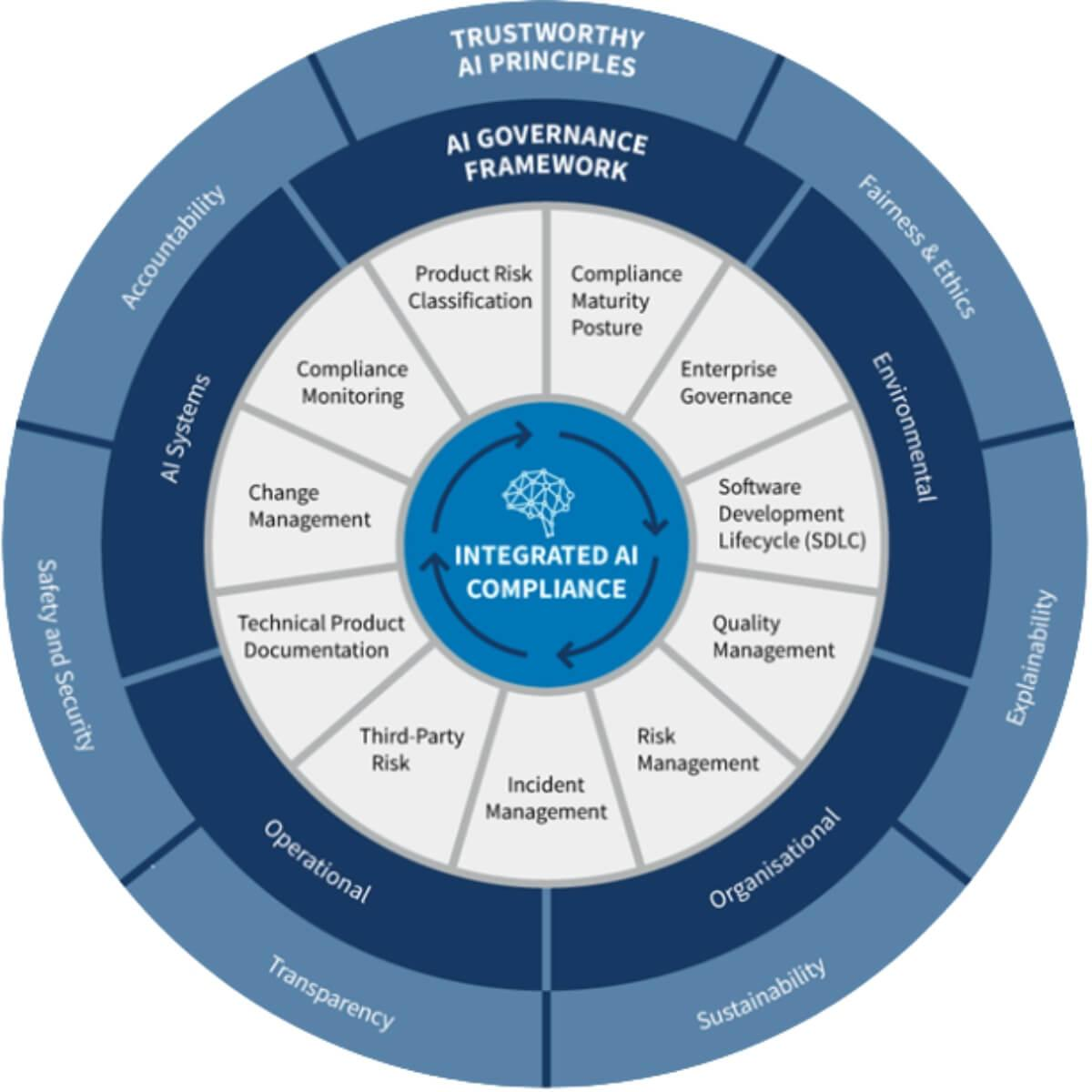
Longitudinal healthcare AI governance framework for prostate cancer showing compliance, clinical validation, data privacy, explainable AI, model monitoring, and clinical decision support
Figure 5 — Longitudinal Healthcare AI Governance Framework for Prostate Cancer Systems. This diagram illustrates how healthcare AI governance integrates compliance, data privacy, model validation, explainability, bias mitigation, human oversight, and longitudinal monitoring to support safe, scalable prostate cancer clinical decision support systems.
Longitudinal healthcare AI system overview for prostate cancer care showing EHR integration, imaging analytics, clinical workflows, wearable monitoring, patient data, and AI-enabled decision support
Figure 6 — Longitudinal Healthcare AI System Overview for Prostate Cancer. This architecture illustrates how EHR systems, imaging analytics, clinical workflows, hospital data infrastructure, wearable monitoring, and AI-enabled decision support can connect into a longitudinal healthcare intelligence model for prostate cancer diagnostics, treatment planning, survivorship monitoring, and personalized care.

Longitudinal Healthcare AI Systems for Prostate Cancer Diagnostics, Treatment, and Survivorship

Modern prostate cancer care is evolving into an integrated longitudinal healthcare AI system that connects clinical workflows, imaging platforms, electronic health records, pathology, genomics, wearable monitoring, and patient-reported outcomes. These systems enable continuous data exchange and longitudinal clinical intelligence across diagnosis, treatment planning, recovery, recurrence monitoring, and survivorship.

By combining prostate cancer diagnostics, AI-assisted treatment planning, remote patient monitoring, wearable healthcare analytics, and longitudinal patient intelligence within a unified healthcare architecture, organizations can move beyond fragmented care models toward coordinated, data-driven clinical decision systems. This transformation supports earlier detection, more personalized treatment selection, better side-effect management, and improved quality-of-life monitoring.

Key Longitudinal Healthcare AI Capabilities AI-enabled healthcare platforms integrate EHR data, imaging analytics, digital pathology, genomics, wearable monitoring, symptom tracking, and patient-reported outcomes to support prostate cancer risk stratification, clinical decision support, predictive analytics, survivorship intelligence, and personalized oncology care pathways.
FAQ

Frequently Asked Questions About AI in Prostate Cancer Care

Common questions about how artificial intelligence, wearables, clinical data, and governance can support prostate cancer treatment and recovery.

How can AI support prostate cancer care?

AI can help integrate clinical data, imaging, pathology, genomics, wearable data, and patient-reported symptoms to support diagnosis, treatment planning, side-effect monitoring, and recovery guidance.

Can AI replace an oncologist or medical team?

No. AI should support clinicians, not replace them. In prostate cancer care, AI is best used as a decision-support tool that helps organize data, identify patterns, and alert care teams to potential risks.

How can wearables help prostate cancer patients?

Wearables can track signals such as heart rate variability, resting heart rate, sleep quality, activity, and recovery trends. These signals may help detect fatigue, treatment intolerance, or early decline during radiation, ADT, or survivorship.

Why is androgen deprivation therapy fatigue important?

ADT can contribute to fatigue, metabolic changes, cardiovascular strain, sleep disruption, muscle loss, and reduced quality of life. AI-enabled monitoring may help patients and clinicians detect changes earlier and adjust support strategies.

What is a Data Lakehouse in healthcare AI?

A Data Lakehouse is a data architecture that combines the flexibility of a data lake with the structure of a data warehouse. In healthcare AI, it can support integration of EHRs, labs, imaging, wearables, and patient-reported data for analytics and machine learning.

What makes AI in prostate cancer different from general healthcare AI?

Prostate cancer care involves a unique combination of imaging, pathology, PSA trends, genomic risk, treatment side effects, ADT-related fatigue, lifestyle interventions, and long-term survivorship monitoring.

What safeguards are needed for AI in prostate cancer care?

Healthcare AI requires privacy protection, clinical validation, bias monitoring, explainability, audit trails, secure data access, and human clinical oversight before it can be responsibly deployed.

Healthcare AI Cluster

AI in Healthcare Systems — From Prostate Cancer Modeling to Patient-Centered Decision Intelligence

A structured collection of healthcare AI resources focused on prostate cancer and oncology systems, connecting diagnostics, predictive modeling, digital pathology, clinical decision support, real-time patient monitoring, governance, and patient-centered outcomes.

01Clinical Need
02Systems Architecture
03Decision Support
04Governance
Clinical Intelligence

AI, Digital Pathology & Real-Time Monitoring

A next-generation oncology system integrating clinical data, digital pathology, AI-driven decision support, and real-time patient monitoring.

Governance

Healthcare AI Governance & Safety

Explore explainability, clinical oversight, auditability, and safe deployment of AI systems in regulated healthcare environments.

Human-Centered Care

Faith-Based Resilience Retreat for Cancer Patients

A community-centered support concept focused on resilience, dignity, recovery, spiritual strength, and quality of life for cancer patients and families.

Future Module

AI Recovery & Side-Effect Monitoring

Future work connecting wearable data, fatigue tracking, HRV, exercise, nutrition, and survivorship support for patients undergoing treatment.

Coming Soon
Future Module

Clinical AI Implementation Handbook

A practical guide for healthcare leaders evaluating AI readiness, clinical workflow fit, governance requirements, and implementation risk.

Coming Soon

Explore the full AI Strategic & Education Hub

Continue into the broader AI architecture, governance, healthcare, hospitality, and small business resource system.

Return to Hub

AI in Prostate Cancer and Healthcare Systems — From Clinical Insight to Integrated Decision Intelligence

AI in healthcare systems is transforming prostate cancer and oncology by connecting diagnostics, predictive modeling, clinical decision support, digital pathology, real-time patient monitoring, and patient-centered outcomes into a unified, data-driven framework. Rather than operating as isolated tools, modern healthcare AI solutions function as integrated systems aligned with clinical workflows, treatment pathways, and governance requirements. This systems-level approach enables more accurate diagnosis, personalized treatment planning, and continuous patient monitoring. Understanding how these components work together is essential for deploying safe, explainable, and scalable AI in real-world healthcare environments.

Continue Through the AI Hub

Recommended Next Reads

Continue into the architecture, governance, and strategic implementation layers that support responsible AI adoption in healthcare and enterprise settings.

Move from Healthcare AI Insight to a Structured Implementation Path

If you are evaluating AI for healthcare, oncology systems, patient monitoring, governance, or executive education, Athena Fusion Solutions can help frame a practical, low-risk path forward.

Longitudinal Healthcare Intelligence Framework

Where This Page Fits in the Broader Longitudinal Healthcare AI Framework

This section connects the prostate cancer AI ecosystem to a broader longitudinal healthcare intelligence framework — one that links EHR integration, clinical workflows, oncology decision support, predictive modeling, wearable monitoring, patient-reported outcomes, governance, interoperability, and human-centered recovery into a structured path for responsible healthcare AI adoption.

The strategic goal is to move beyond isolated AI tools and fragmented healthcare data toward integrated longitudinal healthcare systems that continuously synthesize clinical, behavioral, imaging, genomic, and wearable data across diagnosis, treatment, survivorship, recurrence monitoring, and quality-of-life optimization.

Healthcare AI Systems Pathway

Recommended Next Steps in AI Architecture, Governance, and Healthcare System Design

Continue beyond prostate cancer applications into the broader AI in healthcare systems, including architecture, governance, and deployment frameworks required to build safe, scalable, and clinically effective AI solutions.

Translate Healthcare AI Strategy into Real-World Systems

If you are evaluating AI in healthcare systems, oncology platforms, or clinical decision support solutions, Athena Fusion Solutions provides structured advisory support across system design, governance, and implementation pathways.

Healthcare AI Integration & Systems Strategy Hub

Healthcare AI Is No Longer Just About Models — It Is About Integration, Governance, and Operational Deployment

This Healthcare AI Hub brings together strategic frameworks, AI integration architecture, governance models, clinical workflow systems, and real-world implementation concepts designed to help healthcare organizations move from isolated AI experimentation to operationally integrated intelligence systems.

Strategy
Integration
Clinical Workflows
Governance
Operational AI
Continuous Monitoring Ecosystems

Healthcare AI Strategy & Executive Readiness

Executive-level frameworks focused on AI readiness, operational deployment, implementation barriers, governance, and investment strategy within healthcare environments.

AI–EHR Integration & Clinical Workflow Systems

Technical and operational frameworks focused on integrating AI into real healthcare environments, workflows, and enterprise clinical systems.

Mathematical & Architectural Foundations

Technical deep dives covering the mathematical foundations, reasoning architectures, distributed AI systems, and explainability frameworks behind enterprise healthcare AI.

Clinical Applications & Monitoring Ecosystems

Applied healthcare AI concepts focused on patient monitoring ecosystems, operational intelligence, longitudinal care models, and oncology-related AI systems.

Longitudinal Healthcare Intelligence & Clinical AI Strategy

Build Longitudinal Healthcare AI Systems Around the Patient, the Clinician, and Continuous Clinical Intelligence

Athena Fusion Solutions helps healthcare organizations move beyond fragmented healthcare data and isolated AI tools toward integrated longitudinal healthcare intelligence systems designed to support AI in healthcare, clinical workflow integration, healthcare interoperability, remote patient monitoring, wearable healthcare analytics, and AI-assisted clinical decision support.

These next-generation healthcare AI ecosystems combine EHR integration, oncology workflows, digital pathology, imaging analytics, genomics, survivorship monitoring, patient-reported outcomes, and longitudinal patient intelligence into scalable architectures capable of supporting personalized oncology care, operational visibility, predictive analytics, and explainable AI deployment.

Whether focused on prostate cancer, longitudinal survivorship monitoring, enterprise healthcare AI transformation, or integrated oncology intelligence platforms, the goal is to create governed longitudinal healthcare systems that improve clinical outcomes, reduce workflow fragmentation, support clinicians, and enable more adaptive patient-centered care pathways.

Request a Healthcare AI Strategy Discussion
Healthcare AI Strategy & Longitudinal Intelligence

The Future of Healthcare AI Depends on Longitudinal Intelligence, Interoperability, and Clinical Workflow Integration

The future of healthcare AI may not depend on replacing existing EHR systems, but on building interoperable intelligence layers above fragmented healthcare infrastructure. Through healthcare interoperability, longitudinal clinical intelligence, AI-assisted clinical workflows, wearable monitoring, imaging analytics, digital pathology, genomics, and survivorship monitoring, organizations can transform disconnected healthcare data into a unified healthcare AI ecosystem capable of supporting more adaptive and personalized patient care.

In prostate cancer care, this transformation is especially important because the disease often spans diagnosis, active surveillance, surgery, radiation therapy, androgen deprivation therapy, rehabilitation, recurrence monitoring, and long-term survivorship. AI-powered longitudinal healthcare systems can help integrate multimodal clinical data, wearable analytics, patient-reported outcomes, and predictive oncology intelligence into continuous care pathways designed to improve clinical decision support, operational visibility, and quality-of-life optimization.

The long-term strategic opportunity is not simply deploying isolated AI models, but creating governed healthcare AI architectures capable of integrating EHR systems, remote patient monitoring, wearable ecosystems, oncology imaging, pathology intelligence, predictive analytics, and survivorship workflows into scalable longitudinal healthcare intelligence platforms. Prostate cancer may become one of the first healthcare domains where this next generation of integrated clinical AI ecosystems becomes operationally visible.

Research & Clinical References

References & Supporting Research

The following references support the concepts discussed throughout this longitudinal healthcare AI ecosystem, including prostate cancer survivorship monitoring, clinical AI integration, wearable analytics, imaging intelligence, interoperability, and AI-assisted oncology workflows.

  1. Mayo Clinic Platform — AI-Powered PSA Monitoring
    Earlier and more personalized follow-up care through AI-supported PSA monitoring systems for prostate cancer recurrence detection and longitudinal survivorship monitoring.
    https://newsnetwork.mayoclinic.org/discussion/earlier-more-personalized-follow-up-care-through-prostate-specific-antigen-psa-monitoring-supported-by-ai-powered-by-mayo-clinic-platform/
  2. Prostate Cancer Foundation — Artificial Intelligence & Machine Learning
    Overview of AI applications in prostate cancer imaging, pathology, genomics, recurrence prediction, and precision oncology workflows.
    https://www.pcf.org/artificial-intelligence-and-machine-learning-to-better-inform-patient-outcomes/
  3. ScienceDirect — AI Digital Twins & Longitudinal Oncology Monitoring
    Research discussing multimodal AI systems, digital twins, remote monitoring, and integrated longitudinal healthcare architectures in oncology care.
    https://www.sciencedirect.com/science/article/pii/S0169260725002214
  4. ESMO — AI Symptom Monitoring in Prostate Cancer
    Research evaluating AI-enabled symptom monitoring applications and digital survivorship management platforms for prostate cancer patients.
    https://dailyreporter.esmo.org/news/customised-app-shows-promise-for-monitoring-prostate-cancer-patients-in-real-time
  5. ASCO Publications — AI Clinical Trial Matching
    Research into large language models and AI-assisted oncology trial matching systems using EHR data, pathology reports, and eligibility automation.
    https://ascopubs.org/doi/10.1200/CCI-25-00262
  6. National Cancer Institute — Prostate Cancer Statistics
    National data regarding prostate cancer incidence, survivorship, treatment outcomes, and long-term clinical monitoring trends.
    https://www.cancer.gov/types/prostate
  7. American Cancer Society — Prostate Cancer Facts & Figures
    Epidemiology, survivorship data, treatment statistics, and long-term trends related to prostate cancer care in the United States.
    https://www.cancer.org/cancer/types/prostate-cancer.html
Healthcare AI Ecosystem

AI-Powered Longitudinal Intelligence for Prostate Cancer Care

This prostate cancer AI ecosystem demonstrates how longitudinal healthcare intelligence can integrate EHR systems, imaging analytics, genomics, pathology, wearable monitoring, patient applications, survivorship tracking, and clinical AI workflows into a unified healthcare architecture designed to support personalized oncology care and AI-assisted clinical decision support.

The platform architecture focuses on healthcare interoperability, workflow integration, predictive analytics, survivorship optimization, remote patient monitoring, symptom tracking, and longitudinal patient intelligence across diagnosis, treatment, rehabilitation, recurrence monitoring, and long-term quality-of-life management.

Key topics include healthcare AI architecture, prostate cancer AI ecosystems, clinical workflow integration, wearable healthcare analytics, EHR interoperability, digital pathology, oncology AI systems, predictive healthcare analytics, survivorship intelligence, multimodal healthcare AI, AI governance in healthcare, longitudinal clinical monitoring, remote patient monitoring, and personalized oncology care.

Download AI in Prostate Cancer: A Systems Approach to Clinical Intelligence

Explore how artificial intelligence, longitudinal patient monitoring, EHR integration, wearable health systems, predictive analytics, workflow automation, and systems engineering can transform prostate cancer care, recovery, and clinical decision support.

📘 Download Prostate Cancer AI PDF
Prostate Cancer AI · Clinical Intelligence · Longitudinal Monitoring · Healthcare AI Systems · Predictive Analytics · Wearable Health Data · EHR Integration · Workflow Automation · Digital Health Ecosystems