Healthcare AI Integration Handbook: From Strategy to Clinical Implementation
Healthcare organizations are under increasing pressure to improve patient outcomes, reduce administrative burden, and operate more efficiently. Artificial intelligence (AI) offers a transformative opportunity—but only when it is integrated into real clinical workflows, electronic health record (EHR) systems, and operational processes. This healthcare AI integration handbook provides a structured, governance-first approach to implementing AI across hospitals, clinics, and healthcare systems—ensuring measurable ROI, regulatory compliance, and improved patient care.
Table of Contents
- Executive Summary
- 1. Market Context & Growth
- 2. ROI Framework
- 3. Technical Architecture (RAG & Integration)
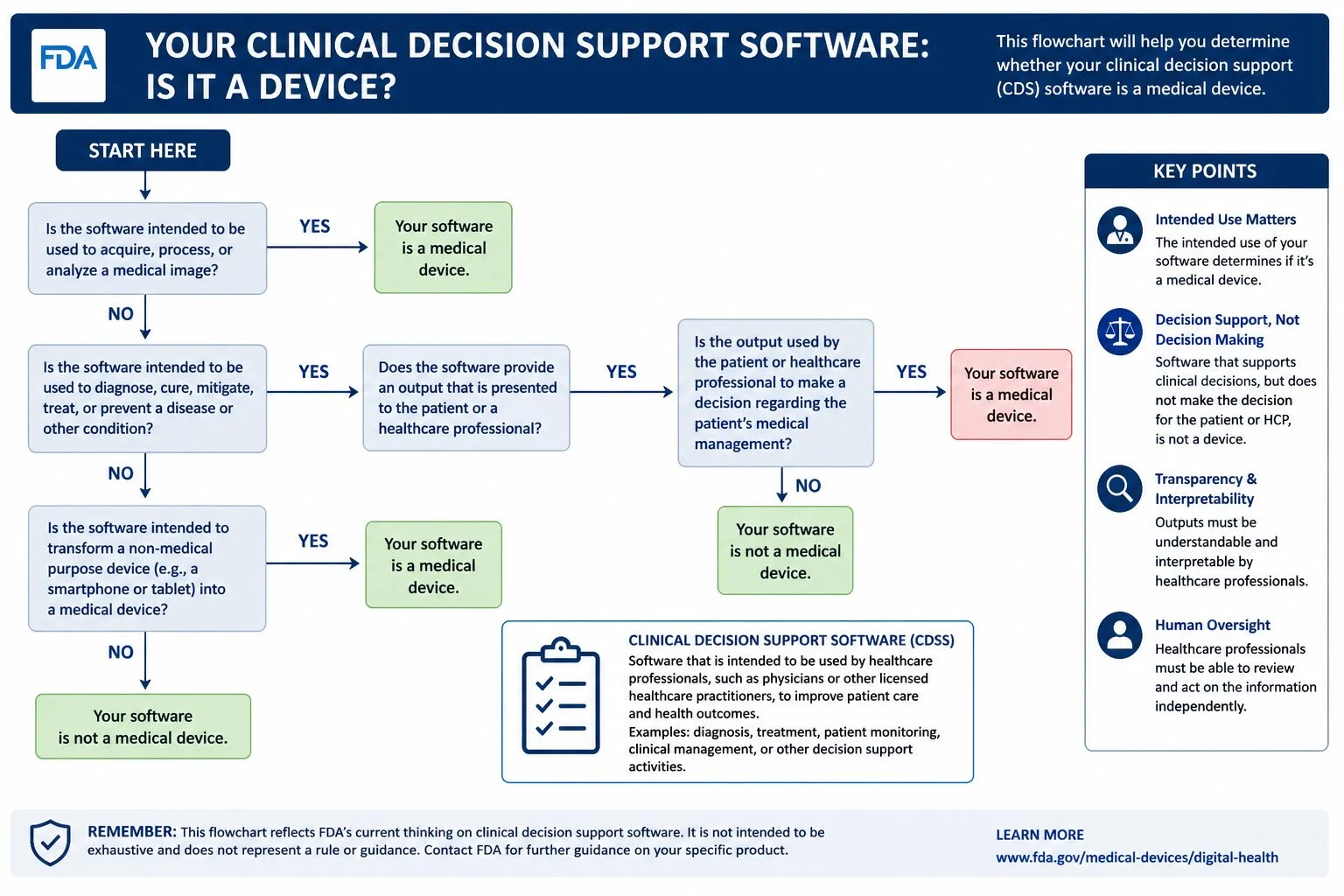
- 4. FDA Clinical Decision Support Compliance
- 5. Hospitality & Wellness Case Studies
- 6. AI in Telemedicine Applications
- 7. AI in Mental Health
- 8. AI in Physical Therapy
- 9. AI in Occupational Therapy
- Medbridge Pathways – Detailed Overview
Executive Summary: Healthcare AI Strategy, Clinical Decision Support, and Governance
A human-centered framework for implementing artificial intelligence in healthcare systems, clinical decision support, telemedicine, mental health, and wellness-focused care delivery.
This healthcare AI strategy handbook outlines how to deploy artificial intelligence in clinical environments while maintaining safety, regulatory alignment, and human-centered care. It spans clinical decision support systems (CDS), telemedicine platforms, mental health applications, physical and occupational therapy optimization, and integrated wellness models.
The framework emphasizes responsible AI governance, measurable ROI, and scalable implementation using structured micro-pilot methodologies. It aligns with evolving expectations around FDA clinical decision support guidance, HIPAA/PHI data protection, and operational performance improvement across healthcare systems.
- AI augments clinical expertise — never replaces physicians, therapists, or care teams
- Micro-pilot implementation enables rapid validation with minimal operational risk
- Measurable ROI including 10–17% revenue improvement and labor efficiency gains
- Governance-first architecture prioritizing HIPAA compliance, PHI protection, and ethical AI use
- Human-centered design ensuring trust, usability, and improved patient outcomes
Healthcare AI Market Growth, Telemedicine Expansion, and Digital Health Trends (2025–2033)
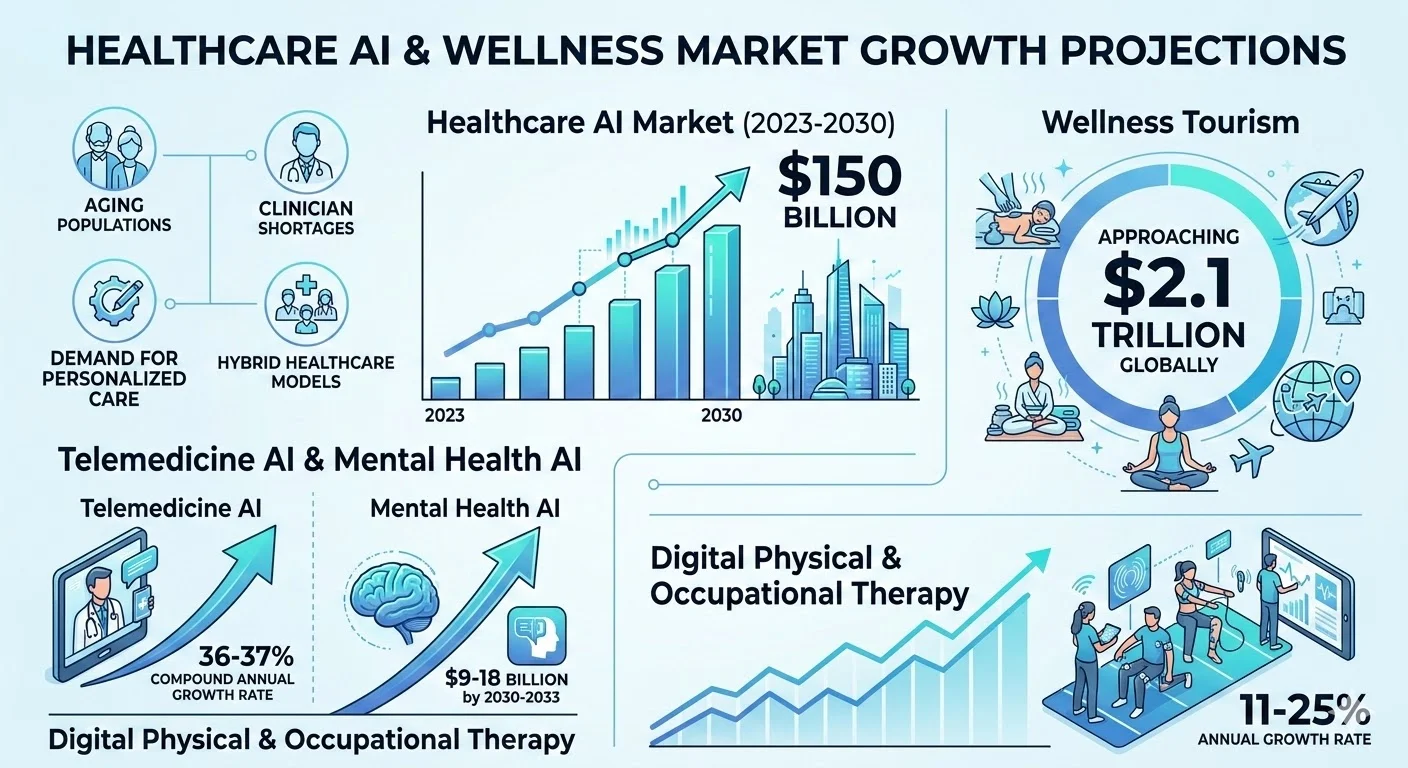
Artificial intelligence in healthcare is rapidly transforming clinical decision support, telemedicine, mental health services, and digital therapeutics. Market growth is being driven by demographic shifts, workforce constraints, and increasing demand for personalized, data-driven care delivery.
The global healthcare AI market is projected to exceed $150 billion by 2030, while the wellness and digital health economy is approaching $2.1 trillion globally. Telemedicine and AI-powered virtual care platforms are expanding rapidly, with estimated compound annual growth rates (CAGR) of 36–37%. The mental health AI sector is expected to reach between $9–18 billion by 2030–2033, reflecting increasing demand for scalable behavioral health solutions.
Additional growth is occurring in AI-enabled physical and occupational therapy, including remote monitoring, computer vision–based movement analysis, and personalized rehabilitation programs, with projected annual growth rates between 11–25%. These technologies are enabling more efficient care delivery models while improving patient outcomes and engagement.
Key macro drivers include aging populations, clinician shortages, rising healthcare costs, and the shift toward preventive, personalized, and hybrid care models that integrate in-clinic services with digital health platforms, wearable data, and AI-driven insights.
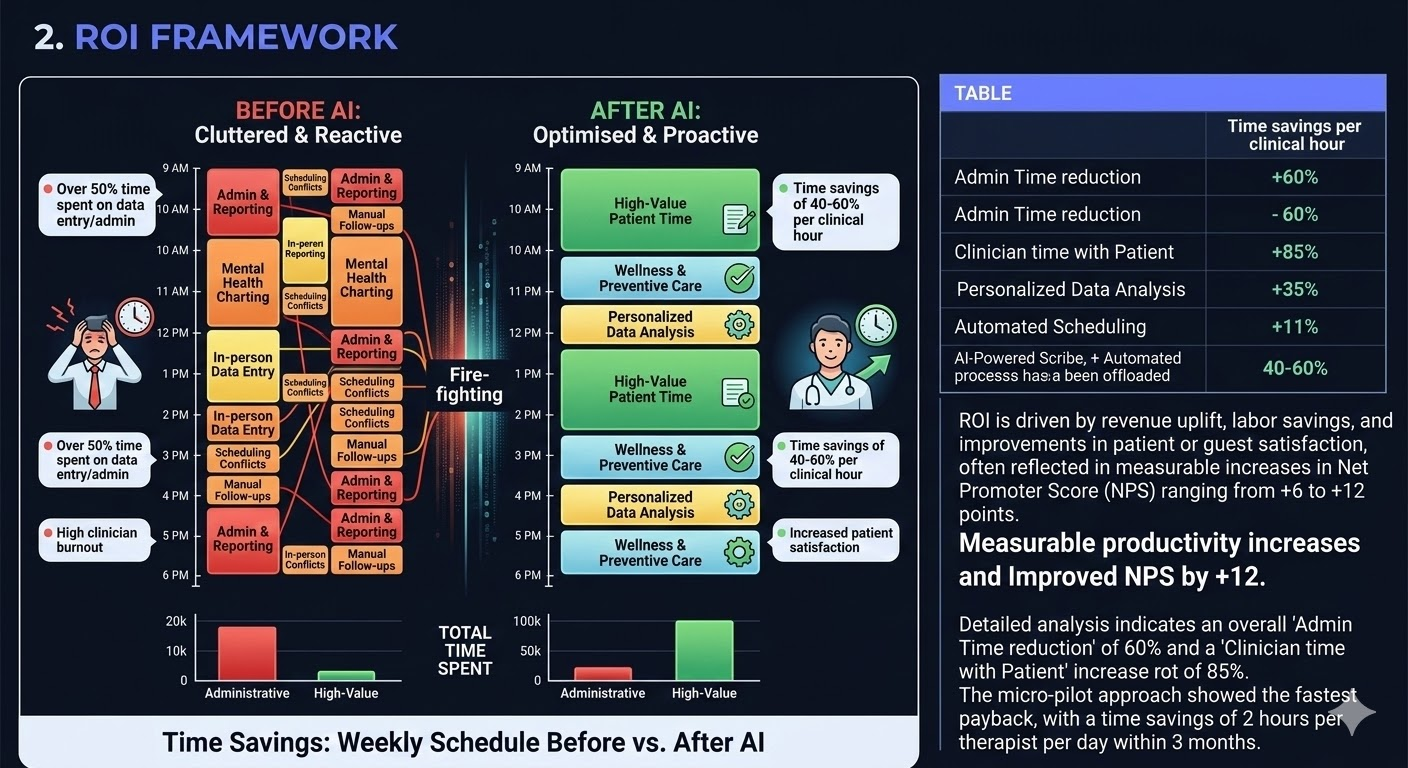
Healthcare AI ROI Framework: Cost, Benefits, and Payback for Clinical Decision Support and Telemedicine
A structured return on investment (ROI) framework for artificial intelligence in healthcare, including clinical decision support systems, telemedicine platforms, and digital health deployments. This model highlights cost structures, revenue impact, operational efficiency gains, and time-to-value.
| AI Deployment Model | Year 1 Investment | Annual Financial Benefit | Payback Period |
|---|---|---|---|
| AI-driven clinical & wellness systems | $600K | $1.5M | 8–10 months |
| Hybrid healthcare AI deployment | $350K | $650K | 10–12 months |
| Micro-pilot AI implementation strategy | $75K | $200K | 6–9 months |
The ROI of artificial intelligence in healthcare is driven by a combination of revenue growth, labor cost reduction, workflow automation, and improved clinical efficiency. Healthcare organizations deploying AI-powered clinical decision support systems, telemedicine platforms, and digital health solutions consistently achieve faster decision-making, reduced administrative burden, and improved care coordination.
In addition to financial gains, organizations typically see measurable improvements in patient experience and satisfaction, with Net Promoter Score (NPS) increases ranging from +6 to +12 points. These improvements reflect enhanced personalization, faster response times, and more consistent care delivery enabled by AI-driven healthcare systems.
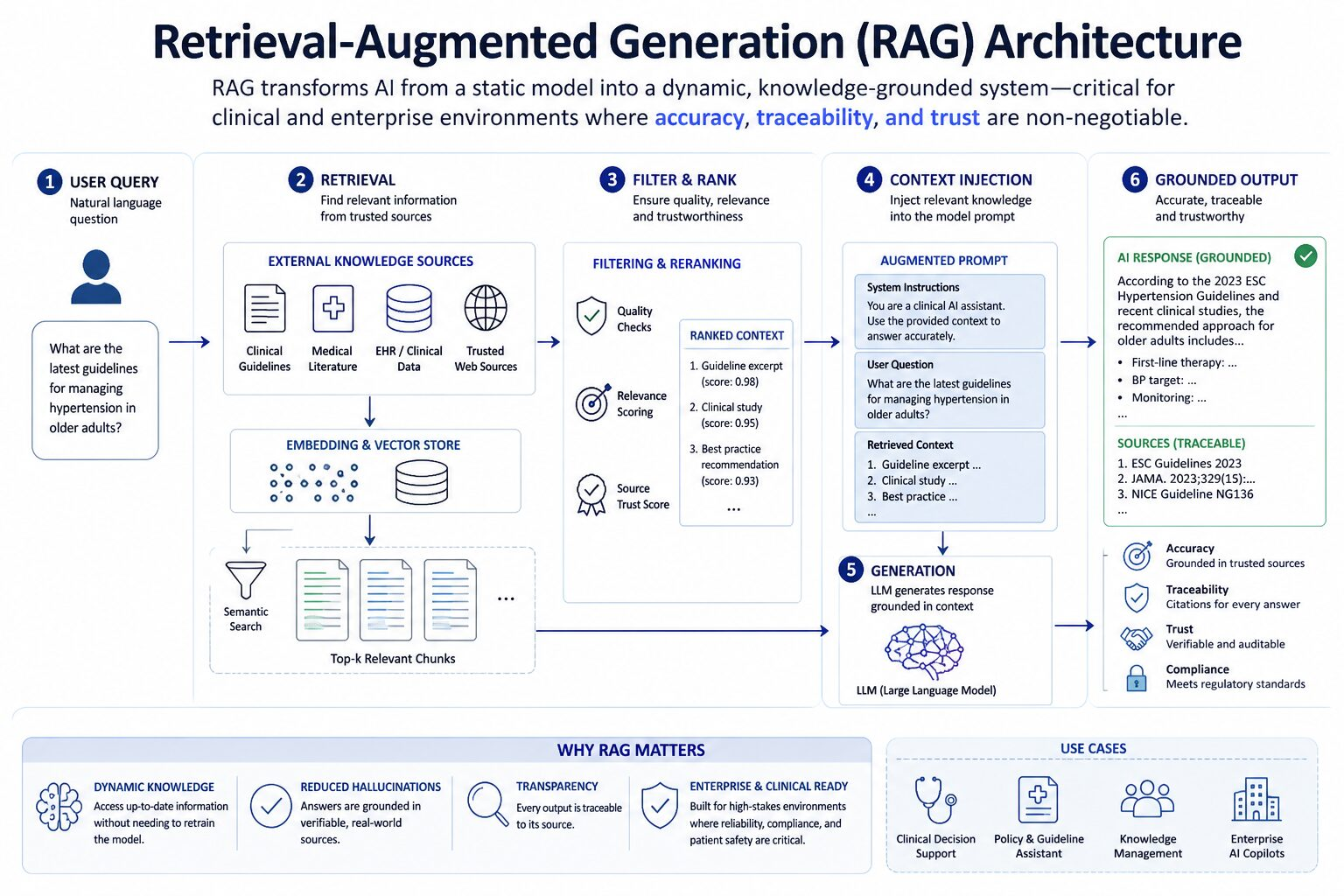
Healthcare AI Architecture: Retrieval-Augmented Generation (RAG), Clinical Decision Support, and Secure Data Integration
A modern technical architecture for artificial intelligence in healthcare, combining retrieval-augmented generation (RAG), secure data pipelines, and HIPAA-aligned infrastructure to support clinical decision support systems, telemedicine, and patient-centered care.
Retrieval-Augmented Generation (RAG) enhances AI in healthcare by grounding model outputs in validated clinical knowledge bases, medical literature, and enterprise data sources. This significantly reduces hallucinations while improving accuracy, traceability, and trust in clinical decision support systems (CDS).
A HIPAA-compliant AI architecture separates protected health information (PHI) from external knowledge retrieval layers using role-based access controls (RBAC), encryption, and secure data segmentation. Hybrid edge–cloud deployment models enable low-latency inference for real-time clinical workflows while maintaining enterprise-grade security and compliance.
Secure API gateways and integration layers connect AI systems with electronic health records (EHR), hospital information systems, telemedicine platforms, and digital health applications. This architecture supports scalable AI-driven workflows across clinical care, remote patient monitoring, diagnostics, and wellness programs.
Explore how this architecture aligns with retrieval-augmented generation (RAG) and edge AI system design and AI governance, safety, and deployment frameworks .
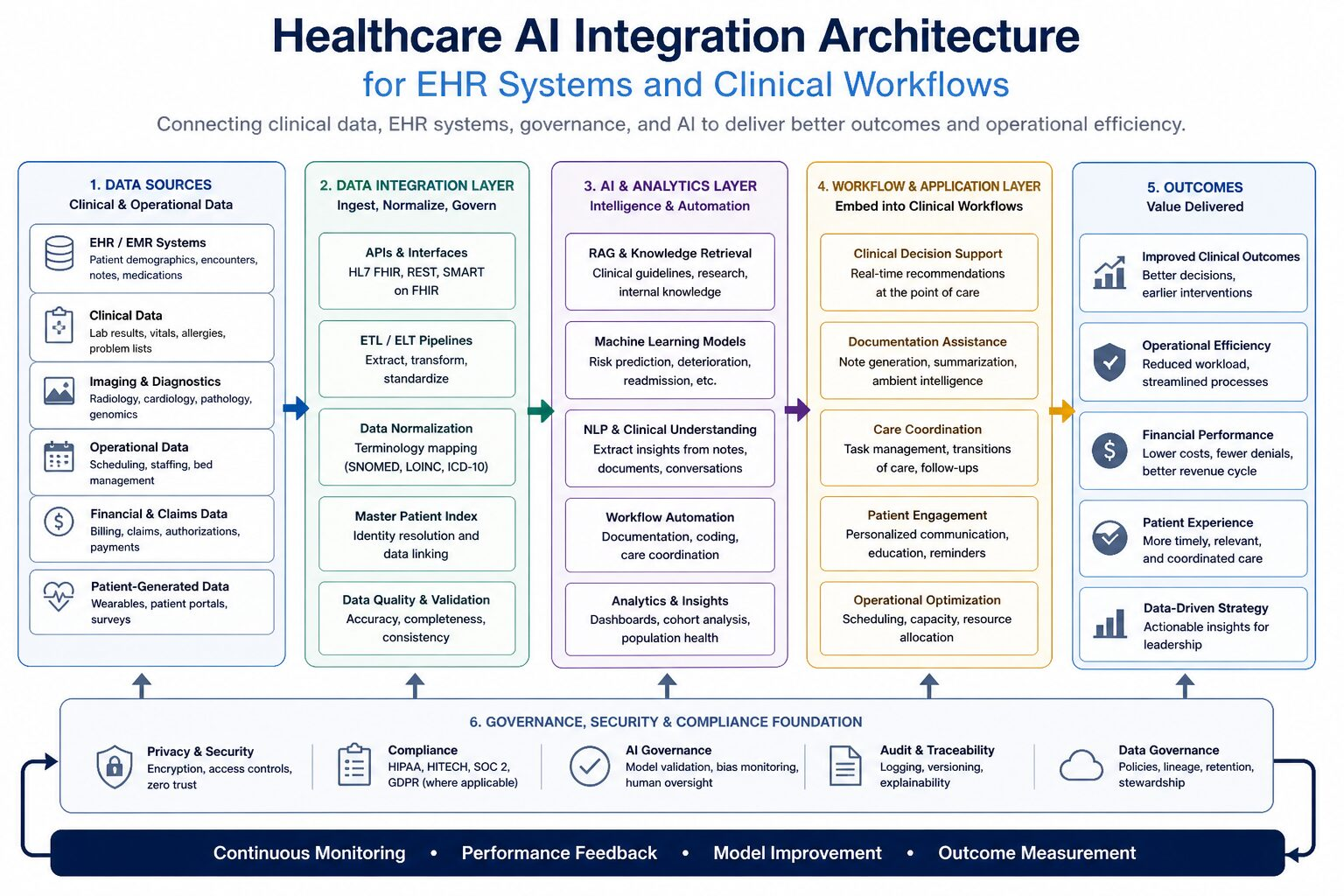
AI Integration in Healthcare Data and EHR Systems
Healthcare AI integration depends on more than selecting the right model or automation platform. Successful implementation requires connecting AI systems to real clinical workflows, electronic health record systems, patient data, operational processes, and governance controls.
In hospitals, clinics, and health systems, AI must operate within complex environments that include EHR platforms, scheduling systems, imaging repositories, claims data, patient portals, and clinician documentation workflows. Without a structured integration layer, AI remains isolated from the systems where decisions are made and value is created.
Core EHR Integration Requirements
Effective healthcare AI implementation requires secure access to structured and unstructured clinical data while preserving privacy, auditability, and clinical oversight.
- Connection to EHR systems and clinical documentation workflows
- API-based access to patient, scheduling, billing, and operational data
- Interoperability across fragmented healthcare applications and databases
- Human review, audit trails, and governance checkpoints
- Alignment with clinical workflow instead of forcing clinicians into separate AI tools
Why Architecture Matters
Healthcare AI should be designed as part of a governed operating system, not as a disconnected application. Retrieval-augmented generation, edge AI, and workflow automation can support clinical and operational use cases when they are deployed with appropriate safeguards.
For a deeper technical foundation, see RAG and edge AI architectures and AI governance, safety, and deployment .
Strategic takeaway: Healthcare AI creates measurable value only when it is integrated into the operational fabric of care delivery—clinical workflows, EHR systems, compliance processes, and executive decision-making.
Why Healthcare AI Is Fundamentally a Data Integration Problem
Many healthcare AI projects underperform because they treat artificial intelligence as a standalone technology instead of an enterprise data integration challenge. Clinical value depends on whether AI can access the right information, at the right time, inside the workflow where clinicians and administrators actually operate.
Patient records, lab values, imaging data, treatment notes, claims information, scheduling systems, and operational data often live in separate systems. A healthcare AI strategy must therefore begin with data readiness, workflow mapping, governance, and implementation design.
This is why AI adoption should be approached as a structured system transformation rather than a software purchase. For related implementation lessons, see why most AI projects fail and how to fix them .
Key Regulatory Principle
Healthcare AI systems remain outside FDA medical device regulation when clinicians can independently review, validate, and understand the clinical reasoning, evidence sources, and decision logic supporting each AI-generated recommendation.
Implication for AI Architecture
FDA-aligned AI architecture requires explainability, traceability, and human-in-the-loop oversight, ensuring that clinical decision support systems remain transparent, auditable, and safe for real-world healthcare deployment.
FDA Clinical Decision Support (CDS) Compliance for Healthcare AI Systems
Understanding FDA guidance for clinical decision support software is critical when deploying artificial intelligence in healthcare. Regulatory classification determines whether AI systems remain non-device software or are subject to medical device regulation.
Clinical Decision Support (CDS) systems must preserve transparency, interpretability, and physician oversight to remain classified as non-device software under FDA guidance. AI systems designed to augment clinical decision-making — rather than replace clinician judgment — can operate outside formal medical device regulation.
To maintain this classification, AI in healthcare must provide clear clinical reasoning, traceable evidence sources, and interpretable decision pathways. Clinicians must be able to independently review and validate AI-generated recommendations before acting on them.
Expanded FDA Regulatory Guidance for AI in Healthcare
The FDA distinguishes between clinical decision support software that assists clinicians and AI-driven medical decision systems that directly influence patient care decisions. When clinicians cannot independently interpret the basis of an AI recommendation, the system may be classified as a regulated medical device.
As a result, AI explainability and transparency are not optional features—they are core design requirements. Effective healthcare AI systems must expose underlying logic, clinical data sources, and reasoning pathways to support trust, safety, and regulatory compliance.
Human-in-the-loop AI architecture ensures compliance by maintaining clinician authority while leveraging AI to enhance diagnostic insight, operational efficiency, and patient outcomes across healthcare systems.
Explore how this regulatory model integrates with retrieval-augmented generation (RAG) architectures and AI governance, safety, and deployment frameworks .
Healthcare AI in Hospitality & Wellness: Case Studies in Spa Optimization, Personalization, and Revenue Growth
Artificial intelligence is transforming luxury hospitality, wellness resorts, and spa operations through personalized guest experiences, AI-driven scheduling, wearable data integration, and predictive service optimization. These case studies highlight measurable ROI and operational efficiency gains.
OneSpaWorld AI Spa Optimization Platform (Machine Learning in Hospitality)
A machine learning–driven spa optimization platform developed with Kungfu.ai enabled AI-powered scheduling, personalized wellness recommendations, and dynamic resource allocation across global spa operations. The system analyzes guest behavior, booking patterns, wearable data, and treatment outcomes to improve utilization, increase revenue, and enhance the overall guest experience.
This use case demonstrates how AI in hospitality and wellness can drive both operational efficiency and personalized health and recovery experiences, aligning with emerging trends in longevity-focused resorts and biometric-driven care models.
- $39M additional annual revenue from AI-driven optimization
- 10-month payback period with >30–40% ROI
- 20–35% increase in ancillary service revenue
- Improved guest satisfaction and personalization

Explore how these results align with AI-driven longevity and wearable-integrated resort experiences and broader AI strategy for luxury hospitality and wellness organizations .
AI in Telemedicine: Remote Patient Monitoring, Virtual Care, and Automated Clinical Workflows
AI in telemedicine is transforming healthcare delivery through remote patient monitoring (RPM), virtual consultations, AI medical documentation, and automated clinical workflows. These systems improve access, reduce clinician workload, and enable more personalized, data-driven care.
The telemedicine AI market is projected to grow from approximately $5.3B in 2025 to between $86B and $124B by 2034, representing a compound annual growth rate (CAGR) of roughly 36–37%.
Figure 7 — AI-powered telemedicine platform illustrating virtual consultation, real-time biometric monitoring, AI-generated clinical transcripts, remote patient monitoring (RPM), and automated follow-up care planning.
AI-Powered Mental Health Intelligence: Behavioral Health Monitoring, Crisis Prediction, and Digital Therapeutics
AI in mental health is expanding across behavioral health systems, integrated care networks, digital therapeutics platforms, and virtual care programs. These systems combine passive biometric monitoring, language analysis, sleep data, HRV trends, and clinician-supervised clinical decision support to identify risk patterns earlier.
Mental health AI can support early depression detection, anxiety monitoring, medication adherence, crisis prediction, population health analytics, and personalized digital interventions while preserving clinician oversight and human-centered care.
Figure 8 — AI-powered mental health application showing behavioral health monitoring, mood modeling, anxiety and sleep tracking, PHQ-9 risk scoring, HRV analysis, crisis prediction, medication adherence support, and clinician-supervised digital therapeutic interventions.
AI in Rehabilitative Sciences: Physical Therapy, Occupational Therapy, and Digital Recovery Systems
Artificial intelligence in rehabilitation is transforming physical therapy (PT) and occupational therapy (OT) through computer vision, predictive analytics, and remote patient monitoring, enabling continuous, data-driven recovery.
AI-Driven Rehabilitation and Recovery Platforms
The AI physical therapy market is projected to exceed $1 billion by 2033, while occupational therapy AI systems are expected to reach approximately $388 million by 2030. Growth is driven by demand for digital rehabilitation platforms, AI-guided therapy, and remote patient monitoring (RPM).
- Computer Vision Gait Analysis: Real-time movement tracking with 95–99% accuracy
- Predictive Recovery Modeling: AI-based rehabilitation forecasting
- Remote Patient Monitoring: Continuous tracking outside clinical environments
- Cognitive & ADL Training: VR/AR-based occupational therapy systems
- AI Clinical Documentation: Automated therapist workflows and reporting

AI Case Study: Medbridge Pathways — Digital Rehabilitation
Medbridge Pathways combines clinician expertise with AI-driven patient guidance, enabling scalable, data-driven rehabilitation programs.
- Mobile Motion Capture: Camera-based movement tracking without hardware
- Structured Therapy Programs: Evidence-based rehabilitation pathways
- Outcome Measurement: Quantitative scoring replacing subjective assessment
- Remote Monitoring: Continuous engagement and RTM reimbursement support
AI for Precision Oncology: Systems Engineering, Predictive Modeling, and Clinical Decision Support
A systems-engineering framework for integrating artificial intelligence into cancer care, precision oncology, real-time patient monitoring, and personalized treatment planning.
AI for precision oncology uses systems engineering to integrate fragmented cancer care data into a unified clinical intelligence ecosystem. By combining EHR data, laboratory results, medical imaging, genomics, wearable data, longitudinal patient trends, machine learning models, large language models, and optimization algorithms, healthcare teams can support more personalized cancer treatment pathways and evidence-based decision support.
This approach enables predictive modeling in oncology, treatment response forecasting, adverse-effect monitoring, real-time adaptation, and patient-centered care planning. The goal is not to replace oncologists, but to strengthen clinical reasoning, reduce avoidable toxicity, improve quality of life, and support interdisciplinary precision medicine.
Why systems engineering matters for AI-driven cancer care
Traditional oncology care often relies on fragmented data sources, static decision rules, and delayed feedback. A systems-level AI architecture connects clinical workflows, patient-generated health data, analytics infrastructure, and clinician oversight into a continuous learning model.
Multi-source integration architectures, including healthcare data lakehouse models, are well suited for the high-volume, heterogeneous data required in oncology. These platforms support scalable analytics across genomics, imaging, laboratory values, EHR records, wearable devices, and patient-reported outcomes.
AI-Driven Precision Oncology Architecture: Data Integration, Machine Learning, and Clinical Decision Support
A systems-engineering architecture for precision oncology that integrates genomics, pathology, medical imaging, electronic health records, wearable biometrics, lakehouse data infrastructure, machine learning models, and clinical decision support tools.
Data Sources Input Layer
Integrates multimodal oncology data, including genomics, digital pathology, radiology imaging, laboratory results, wearable biometrics, patient-reported outcomes, and electronic health records. These datasets provide the foundation for AI-driven cancer diagnostics, predictive oncology models, and personalized treatment planning.
Unified Data Layer: Healthcare Lakehouse Core
A scalable healthcare data lakehouse architecture combines the flexibility of data lakes with the analytical performance of data warehouses. This layer supports clinical analytics, oncology research, machine learning pipelines, and longitudinal patient monitoring across heterogeneous cancer care datasets.
AI and Machine Learning Layer
Machine learning in precision oncology analyzes multimodal clinical datasets to identify treatment response patterns, forecast adverse effects, predict toxicity risk, and support personalized therapy selection using continuously improving predictive analytics.
Clinical Access and Decision Support Layer
Secure dashboards, APIs, and clinician-facing interfaces allow oncologists, researchers, and care teams to visualize model outputs, review evidence pathways, explore treatment predictions, and integrate AI-assisted clinical decision support into real-world oncology workflows.
Mobile Health App and AI Ecosystem Development for Prostate Cancer Care
A staged digital health architecture for building an AI-driven prostate cancer care ecosystem using wearable data, patient-reported outcomes, remote patient monitoring, clinical analytics, predictive modeling, and future oncology decision support tools.
Building a Patient-Facing Mobile App for AI-Driven Oncology Care
A practical way to develop an AI prostate cancer platform is to begin with a patient-facing mobile health app that captures wearable data, symptoms, fatigue patterns, sleep quality, exercise activity, nutrition habits, treatment side effects, and patient-reported outcomes. This creates early patient engagement while building the longitudinal dataset needed for precision oncology analytics.
As the platform matures, a parallel clinician-facing oncology dashboard can provide predictive insights, risk alerts, treatment-response trends, adverse-effect tracking, and clinical decision support. Over time, the ecosystem can integrate laboratory results, genomic testing, medical imaging, research literature, electronic health records, and prostate cancer treatment history.
Existing consumer health platforms can support early-stage development. Google Fit can serve as a wearable and fitness data aggregation layer across Android and iOS devices, while Health Connect enables secure exchange of activity, sleep, heart rate, recovery, and wellness metrics between Android health applications.
This staged architecture allows development to begin with a focused mobile app while building the infrastructure required for a larger AI healthcare ecosystem. Over time, the system can evolve into a distributed clinical intelligence platform supporting personalized prostate cancer treatment insights, longitudinal monitoring, side-effect management, survivorship care, and population-scale oncology research.
Core Components of an AI Prostate Cancer Care Ecosystem
- Patient-facing mobile health app: wearable data, symptoms, fatigue, recovery, exercise, nutrition, sleep, and patient-reported outcomes
- Clinician oncology dashboard: predictive analytics, treatment response monitoring, adverse-effect tracking, and clinical decision support
- Healthcare data infrastructure: EHR integration, genomics, imaging, laboratory results, research literature, and longitudinal oncology records
- AI analytics layer: predictive modeling, risk stratification, treatment optimization, side-effect prediction, and personalized cancer care insights
- Remote patient monitoring: continuous tracking of recovery, cardiovascular fitness, fatigue, sleep, activity, and quality-of-life metrics
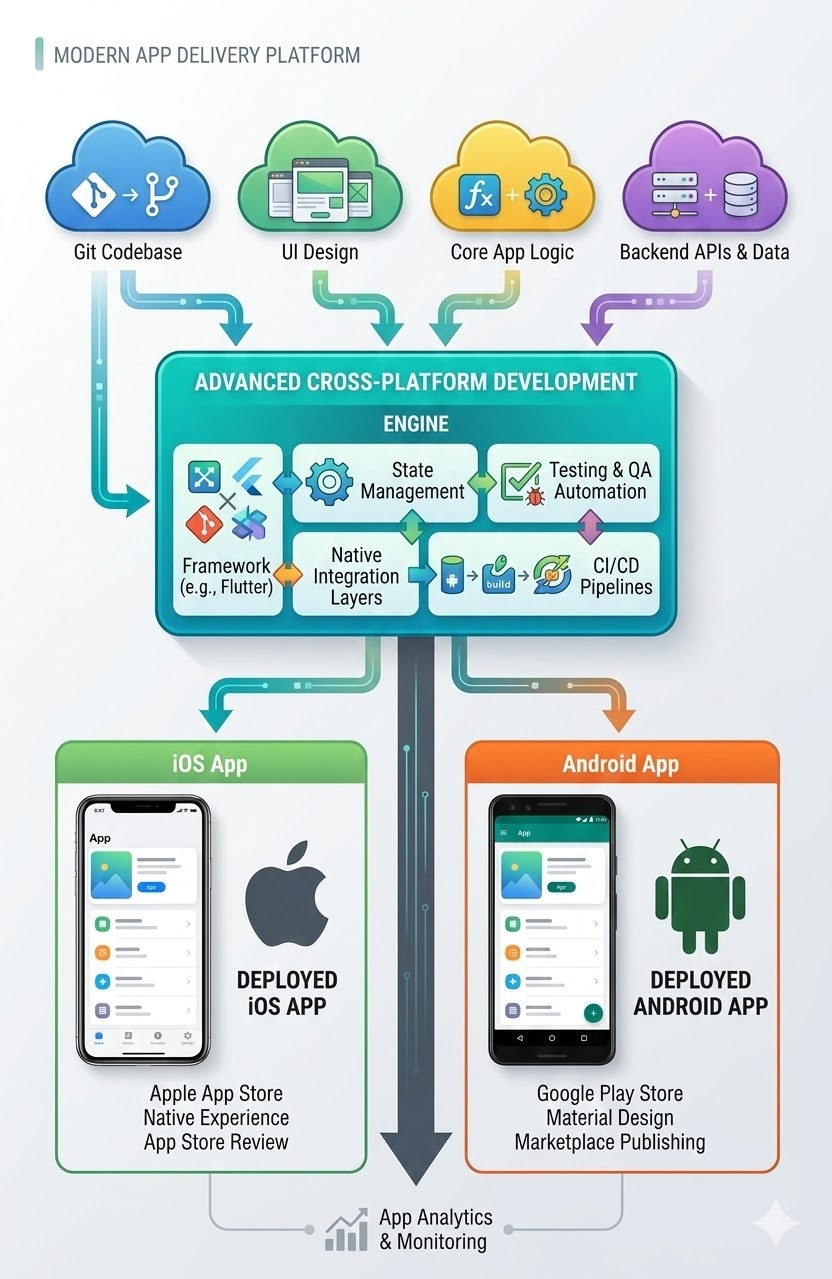
Cross-Platform Mobile App Development for AI Healthcare and Prostate Cancer Care
A cross-platform development model allows an AI-driven prostate cancer mobile app to support both iOS and Android users while maintaining a shared codebase, scalable architecture, wearable integration, and consistent patient experience.
Supporting iOS, Android, Wearables, and Mobile Health Ecosystems
The ideal long-term solution is to build the AI healthcare mobile application for both iOS and Android using a modern cross-platform app development framework such as Flutter or React Native. This approach improves development efficiency, reduces maintenance cost, and supports a broader patient population across Apple Health, Google Fit, Health Connect, Fitbit, Garmin, and other wearable health platforms.
OT Implementation Roadmap: The 13-Week Micro-Pilot
Weeks 1–3
Discovery & Nordic Co-Design
- Stakeholder Alignment: Identify lead Occupational Therapists for the internal "Innovation Council."
- Workflow Audit: Mapping current ADL assessment friction points and documentation lag.
- Tech Selection: Finalize Medbridge Pathways integration parameters and EMR handshake protocols.
Weeks 4–7
Architecture & Compliance
- Data Governance: Establish PHI-safe ingestion layers for 3D motion capture and wearable data.
- Pilot Setup: Configure Ambient Documentation (Scribes) for a select group of five OTs.
- Staff Training: Hands-on "Nordic agency" workshops—training clinicians to oversee AI, not just follow it.
Weeks 8–11
Clinical Micro-Pilot
- Live Deployment: Initiate AI-assisted MSK and senior care rehabilitation programs via Medbridge.
- Real-time RPM: Active monitoring of patient progress through remote quantitative scoring.
- Feedback Loops: Weekly co-design "huddles" to adjust AI intervention planning based on patient response.
Weeks 12–13
Evaluation & Scale
- ROI Analysis: Measuring labor savings in documentation vs. revenue uplift from RTM billing.
- Outcome Review: Comparing AI-assisted functional scores against traditional clinical benchmarks.
- Scale Roadmap: Strategic plan for system-wide expansion across all therapy departments.
Decision Tree for Users
The decision tree represents how patient inputs drive data flow and AI-supported decision-making. The user enters symptoms while the app pulls timestamped information from connected fitness trackers and wearable devices.
AI and machine learning models then evaluate fatigue, anomalies, and other health indicators. These outputs are coordinated with clinical rules to generate patient-facing guidance and recommendations. The cycle then repeats as patients modify behaviors and enter updated inputs.
In a healthcare or wellness application, this type of logic can be extended well beyond a simple comparison model. It becomes the basis for structured triage, symptom escalation, remote monitoring workflows, and personalized intervention pathways that combine patient-reported data with sensor-derived information.
The visual framework is useful because it makes the sequence of decisions easy to interpret for clinicians, developers, and executive stakeholders. It shows how data moves from intake to evaluation, then into guidance, alerts, or follow-up actions in a closed-loop care model.
Algorithm Description — Finding the Largest of Three Numbers
This flowchart implements a classic comparison algorithm that determines which of three input values — A, B, and C — is the greatest, using only two decision steps.
How it works: The algorithm first compares A against B. If A is greater, it then checks A against C — if A wins again, A is the largest; otherwise C is. If B is greater than or equal to A, it then checks B against C — if B wins, B is the largest; otherwise C is.
YES paths (green) indicate a condition is true and flow to the left or next comparison. NO paths (red) indicate a condition is false and route to the alternative branch.
Three outcomes are possible: Print A (A ≥ B and A ≥ C) · Print B (B > A and B ≥ C) · Print C (C is greater than both). All three paths converge at END.
Time complexity: O(1) — constant time, always exactly 2 comparisons. Space complexity: O(1).
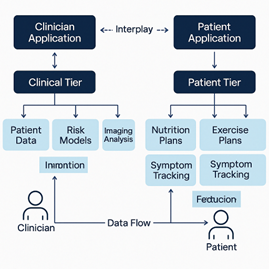
Two-Tier AI Healthcare App Architecture for Clinicians and Patients
A patient-facing mobile app and clinician-facing dashboard can work together as a connected AI healthcare ecosystem for remote patient monitoring, symptom tracking, wearable data analysis, and personalized prostate cancer care.
The ecosystem can evolve into a two-tier mobile health app system with distinct applications for patients and clinicians. This architecture enables personalized, data-driven healthcare while keeping each user experience tailored to specific workflows, needs, and responsibilities.
The patient mobile app can provide dashboards for HRV, resting heart rate, fatigue level, sleep quality, hydration, movement, exercise adherence, treatment side effects, and patient-reported outcomes. These metrics create a continuous picture of recovery and quality of life.
The clinician-facing dashboard can aggregate insights across multiple patients, support risk stratification, generate real-time alerts, improve clinical decision-making, reduce administrative workload, and enable longitudinal monitoring for prostate cancer treatment support.
Clinical–Patient Application Architecture for AI-Driven Prostate Cancer Care
One example of a connected digital health architecture linking clinician dashboards, patient mobile apps, wearable data, clinical decision support, and remote patient monitoring for personalized prostate cancer management.
This diagram presents one illustrative example of how an AI-enabled cancer care platform can connect a clinician-facing application with a patient-facing mobile health app through a shared digital healthcare architecture. On the clinical side, oncologists, urologists, radiologists, nurse specialists, and care teams can access longitudinal patient data, imaging analysis, risk models, treatment-response trends, and clinical decision support through a secure clinical interface.
On the patient side, individuals use a mobile-first application for symptom tracking, patient education, nutrition guidance, exercise planning, secure messaging, wearable-integrated monitoring, fatigue tracking, side-effect reporting, and recovery support. These patient-generated health data streams create a more continuous view of treatment tolerance, quality of life, and survivorship needs.
Together, these layers form a closed-loop AI healthcare ecosystem in which clinician-facing intelligence guides patient support, while patient-reported outcomes and passive wearable data flow back to the care team for ongoing assessment. The architecture illustrates how a connected platform can support more continuous, personalized, and proactive prostate cancer treatment, recovery, and long-term monitoring.
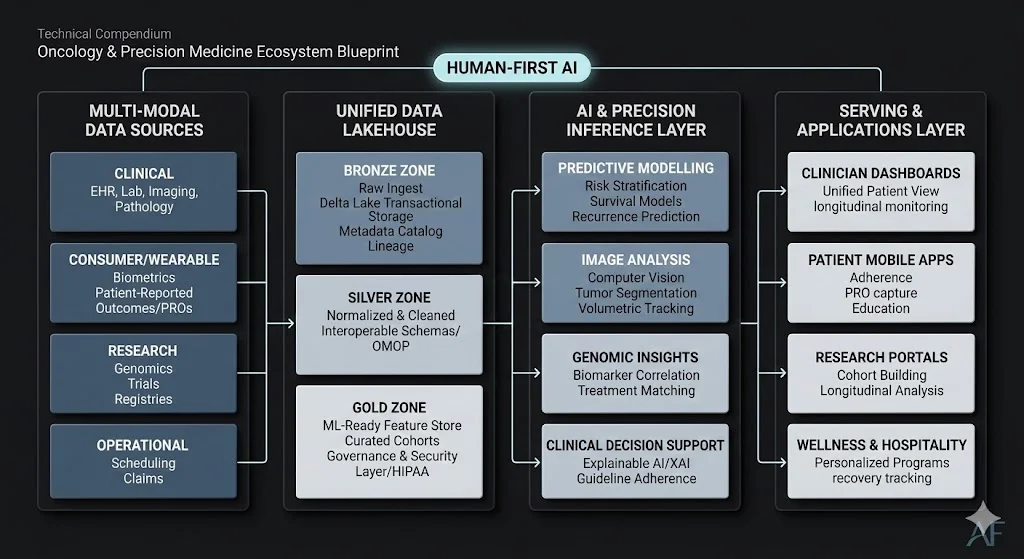
Multi-Modal Lakehouse Architecture for AI-Driven Oncology and Clinical Data Integration
This AI healthcare architecture is designed to manage the real-world heterogeneity of
oncology data, clinical workflows, and chronic care systems by integrating multiple data modalities
into a unified healthcare data lakehouse. The platform supports structured and unstructured data
sources including electronic health records (EHR), genomics, medical imaging, laboratory results, wearable data, and patient-reported outcomes.
By separating sensitive Protected Health Information (PHI) from the knowledge retrieval and inference layers,
the system enables HIPAA-aligned AI deployment, secure data governance, and scalable analytics while maintaining
high model performance for clinical decision support, predictive modeling, and personalized cancer care.
AI-Driven Clinical–Patient Application Architecture for Prostate Cancer Care
This interactive architecture diagram illustrates how a modern AI healthcare ecosystem connects clinician-facing applications, patient mobile apps, wearable data, and clinical decision support systems into a unified platform for prostate cancer treatment, monitoring, and recovery.
The model demonstrates a closed-loop digital health system integrating multi-modal data (EHR, genomics, imaging, patient-reported outcomes, and biometrics) with AI-driven risk models, imaging analysis, and personalized care pathways. This architecture enables continuous monitoring, early risk detection, treatment optimization, and improved patient outcomes while maintaining HIPAA-compliant data governance.
Interactive system architecture illustrating the integration of clinician dashboards, patient mobile applications, AI risk modeling, imaging analysis, wearable-based symptom tracking, and personalized care pathways. The diagram highlights real-time data flow, closed-loop feedback systems, and AI-supported clinical decision making for prostate cancer management and digital health ecosystems.
Clinical Data Lakehouse Architecture for AI-Driven Oncology and Precision Medicine
A scalable AI healthcare data platform integrating EHR, medical imaging, genomics, wearable data, and patient-reported outcomes to enable clinical decision support, predictive analytics, and personalized prostate cancer care.
This clinical data lakehouse architecture unifies fragmented healthcare data sources — including electronic health records (EHR), imaging systems (MRI/PET/CT), genomic sequencing, wearable biometrics, registries, and patient-reported outcomes (PROs) — into a governed, scalable platform. It supports AI-driven clinical decision support systems, precision diagnostics, treatment planning, continuous patient monitoring, and oncology research.
Core pipeline architecture: Data Ingestion → Lakehouse Storage (Bronze / Silver / Gold) → AI Processing & Predictive Analytics → Clinical Applications & Patient Platforms, all secured by a cross-cutting Governance, Security, and Compliance Layer (HIPAA / PHI / RBAC).
Detailed AI Healthcare Architecture Layers (Expand)
1. Data Ingestion Layer (Healthcare Data Integration)
Integrates structured and unstructured data from EHR systems (Epic, Cerner), wearable devices, imaging platforms, genomics pipelines, and clinical registries. Supports real-time streaming and batch ingestion across heterogeneous oncology workflows.
2. Lakehouse Storage (Healthcare Data Lake + Warehouse)
Multi-layered storage architecture:
- Bronze: Raw clinical data ingestion
- Silver: Normalized and structured datasets (OMOP, FHIR)
- Gold: AI-ready features, cohorts, and longitudinal patient records
3. AI Processing & Predictive Analytics Layer
Enables machine learning and deep learning models for tumor detection, risk stratification, survival prediction, and treatment optimization. Supports frameworks such as TensorFlow, PyTorch, and Spark ML.
4. Clinical Applications & Patient Platforms
Delivers insights via clinician dashboards, mobile health apps, remote patient monitoring systems, and research interfaces. Supports personalized treatment recommendations and continuous patient engagement.
5. Governance, Security & Compliance Layer
Ensures HIPAA compliance, PHI protection, role-based access control (RBAC), audit logging, and secure data governance across all layers of the AI healthcare platform.
Executive Insight: This AI-driven clinical data lakehouse serves as the foundational platform for precision oncology, enabling scalable analytics, real-time patient monitoring, and integrated clinical decision support across healthcare and research environments.
AI Healthcare Data Lakehouse for Oncology Diagnostics, Treatment Planning, and Research
This interactive architecture shows how an AI-driven clinical data lakehouse can integrate EHR systems, wearable data, medical imaging, genomics, laboratory results, patient-reported outcomes, and clinical registries to support precision oncology, remote patient monitoring, and clinical decision support.
The model illustrates the full healthcare data pipeline: data ingestion, Bronze/Silver/Gold lakehouse storage, AI processing and predictive analytics, clinician and patient applications, and a cross-cutting governance and security layer for HIPAA-aware data management, PHI protection, audit logging, role-based access control, and responsible AI deployment.
AI Healthcare Data Platform Architecture: End-to-End Clinical Intelligence Ecosystem
This healthcare AI architecture illustrates a modern, scalable clinical data platform integrating electronic health records (EHR), wearable data, medical imaging, genomics, and patient-reported outcomes. The system leverages a lakehouse data architecture, machine learning pipelines, and real-time analytics to enable personalized treatment recommendations, clinical decision support, and continuous patient monitoring.
Data Ingestion Layer
6 source systems with animated data flow into storage
EHR
FHIR-based clinical records, medications, diagnoses, procedures, encounters, and care plans.
Wearables
Heart rate, HRV, sleep, steps, training load, and device-generated physiologic trends.
Imaging
MRI, CT, ultrasound, pathology images, radiology metadata, and imaging-derived measures.
Lab / Genomic
Biomarkers, blood chemistry, genomics, molecular assays, and precision medicine features.
Patient Outcomes
PROs, symptom burden, quality of life, treatment tolerance, and recovery progression.
Clinical Trials
Eligibility rules, protocol data, outcomes cohorts, research registries, and observational studies.
Lakehouse Storage Layer
Delta Lake badge, Bronze / Silver / Gold tiers, and metadata catalog
Delta Lake
Transactional storage foundation for reliable ingest, schema evolution, versioning, and reproducible pipelines.
Bronze
Raw landed feeds from clinical, wearable, imaging, and research systems with minimal transformation.
Silver
Standardized, cleaned, normalized, and interoperable data models ready for analytics and feature generation.
Gold
Curated, trusted datasets for dashboards, AI inference, research reporting, and care pathway optimization.
Metadata Catalog
Lineage, schema registry, discoverability, quality rules, ownership, sensitivity labels, and governance context.
Processing & Analytics Layer
Purple and pink data movement across processing, modeling, and feature management
Apache Spark
Distributed ETL, feature engineering, cohort building, and longitudinal health data processing at scale.
TensorFlow / PyTorch
Training and deployment of deep learning models for multimodal healthcare intelligence.
Patient Progress Monitoring
Continuous surveillance of symptoms, treatment response, and recovery trajectory.
Side Effect Prediction
Risk models for adverse events, therapy tolerance, and proactive supportive care planning.
AI Tumour Grading
Imaging and pathology-assisted scoring such as PI-RADS and Gleason-oriented decision support.
Risk Stratification Engine
Patient segmentation for triage, escalation, survivorship planning, and intervention prioritization.
Feature Store
Reusable, governed online and offline features for consistent training, inference, and experimentation.
Serving & Application Layer
Clinical, patient, research, and education-facing applications built on governed intelligence
Personalised Treatment Recommendations
Decision support for therapy selection, escalation logic, and individualized care planning.
Clinician Dashboard
Unified patient view with trends, alerts, adherence signals, and action-ready risk insights.
Patient App
Symptom capture, self-management, reminders, progress tracking, and secure engagement workflows.
Research Analytics Portal
Cohort analysis, model outcomes, real-world evidence, and translational research exploration.
Wearable Device Sync
Continuous synchronization of physiologic data to support timely intervention and adaptive care.
Video Education Library
Guided education for treatment expectations, side-effect management, exercise, and nutrition support.
Governance Bar
Security, compliance, privacy, and access control spanning every layer
HIPAA / GDPR
Privacy-by-design controls, data handling policies, consent alignment, and regulatory compliance coverage.
Audit Logging
Immutable event trails, actor tracking, model activity records, and defensible operational traceability.
De-Identification Engine
PHI minimization, tokenization, anonymization, and research-safe dataset preparation workflows.
Role-Based Access Control
Least-privilege access, clinician vs researcher segmentation, and policy-enforced application permissions.
Frequently Asked Questions
Healthcare AI Strategy, Clinical Data Platforms, and Oncology AI Systems
Answers to common questions about implementing artificial intelligence in healthcare, building clinical data architectures, integrating wearable health data, and governing AI systems for reliable clinical use.
What is healthcare AI strategy?
Healthcare AI strategy is the structured planning process for using artificial intelligence to improve clinical workflows, patient monitoring, operational efficiency, and treatment decision support. A strong strategy connects use cases, data readiness, governance, privacy, clinical validation, and measurable return on investment.
How can AI improve oncology care?
AI can support oncology care by helping analyze imaging, pathology, genomics, laboratory results, patient-reported outcomes, and wearable health data. In practice, oncology AI systems may help with risk stratification, treatment planning, side-effect prediction, patient monitoring, survivorship support, and clinical research analytics.
What is a clinical data platform?
A clinical data platform is an integrated architecture for collecting, organizing, securing, and analyzing healthcare data. It may include electronic health records, imaging, laboratory data, genomic information, wearable device data, patient outcomes, and research datasets. Modern healthcare AI platforms often use lakehouse architectures to support analytics and machine learning.
Why is governance important for healthcare AI?
Governance is essential because healthcare AI systems must protect patient privacy, support clinical accountability, manage model risk, control access to sensitive data, and maintain auditability. Effective AI governance includes security, HIPAA-aware workflows, role-based access, model monitoring, human oversight, and clear decision boundaries.
How do wearable devices support AI patient monitoring?
Wearable devices can provide continuous signals such as heart rate, heart rate variability, sleep, activity, recovery trends, and training load. When integrated into a governed healthcare AI architecture, these signals can help monitor patient status, identify early changes, personalize interventions, and support longitudinal care outside the clinic.
What is the best first AI project for a healthcare organization?
The best first project is usually a focused micro-pilot with clear clinical or operational value, available data, measurable outcomes, and limited workflow disruption. Examples include patient monitoring dashboards, documentation support, risk stratification, care navigation, side-effect tracking, or research cohort analytics.
Academic & Technical References for AI in Healthcare Systems
Internal Technical References (Athena AI Strategic Hub)
- Athena Fusion Solutions. How Artificial Intelligence Works — Core System Overview .
- Athena Fusion Solutions. Appendix A — Technical Foundations of Artificial Intelligence .
- Athena Fusion Solutions. Appendix B — Mathematical & Architectural Foundations of Modern AI .
- Athena Fusion Solutions. Appendix C — Retrieval-Augmented Generation (RAG) and Edge AI Architectures .
- Athena Fusion Solutions. Evolution of AI to Neuro-Symbolic Systems (Explainability & Governance) .
- Athena Fusion Solutions. AI Systems & Tools Compared — 2026 Platform Landscape .
- Athena Fusion Solutions. AI Readiness Framework for Organizations .
External Academic & Industry References
- Lewis, P., et al. (2020). Retrieval-Augmented Generation for Knowledge-Intensive NLP Tasks. arXiv:2005.11401 .
- Bommasani, R., et al. (2021). On the Opportunities and Risks of Foundation Models. Stanford Foundation Models Report .
- :contentReference[oaicite:0]{index=0} (2019). High-Performance Medicine: The Convergence of Human and Artificial Intelligence. Nature Medicine Publication .
- :contentReference[oaicite:1]{index=1} et al. (2019). A Guide to Deep Learning in Healthcare. Nature Medicine — Deep Learning in Healthcare .
- U.S. Food and Drug Administration (FDA). Clinical Decision Support Software Guidance. FDA Clinical Decision Support Guidance .
- :contentReference[oaicite:2]{index=2} FHIR Healthcare Data Interoperability Standard. HL7 FHIR Specification .
- :contentReference[oaicite:3]{index=3} (2021). Global Strategy on Digital Health 2020–2025. WHO Digital Health Strategy .
- :contentReference[oaicite:4]{index=4} The Future of AI in Healthcare. Healthcare AI Research Insights .
- :contentReference[oaicite:5]{index=5} Editorial Board. Artificial Intelligence in Clinical Practice. Nature Medicine Journal .
- Medbridge. Guided Pathways Digital Rehabilitation Platform .
- World Health Organization (2021). Ethics and Governance of Artificial Intelligence for Health. WHO AI Ethics Framework .
- FDA (2023). Artificial Intelligence / Machine Learning (AI/ML)-Enabled Medical Devices. FDA AI/ML Medical Device Guidance .
AI in Healthcare — A Clinical Intelligence System
A structured framework for integrating AI into clinical workflows, diagnostics, patient monitoring, and healthcare operations—bridging data, decision-making, and real-world patient outcomes.
AI in Prostate Cancer Care
An integrated view of how AI supports diagnostics, treatment planning, patient monitoring, and clinical decision-making.
Next-Generation Prostate Cancer Treatment
A systems-level approach combining digital pathology, AI modeling, wearables, and real-time patient data integration.
AI + Wearables in Cancer Recovery
Using physiological data (HRV, VO2, fatigue) to personalize recovery and improve treatment tolerance.
AI Clinical Decision Intelligence
How machine learning and structured knowledge systems improve diagnostic accuracy and treatment selection.
AI Safety & Clinical Trust
Ensuring transparency, validation, and regulatory alignment in healthcare AI deployment.
Predictive Oncology Systems
AI-driven predictive modeling to anticipate disease progression and optimize treatment strategies.
Coming SoonFrequently Asked Questions: Healthcare AI Integration
Healthcare AI
Systems & Integration
Clinical AI frameworks, EHR integration models, disease-specific applications, and governance systems built for healthcare executives, clinicians, and IT leaders.
Healthcare AI Strategy & Implementation
Ready to Turn AI Potential Into Clinically Reliable Healthcare Systems?
Athena Fusion Solutions helps healthcare leaders, oncology innovators, and digital health teams design scalable AI strategies, clinical data architectures, wearable-enabled monitoring systems, and governance frameworks that bridge the gap between artificial intelligence experimentation and real-world clinical impact.